

Middle schoolers want to build things that actually do something. They are ready for real mechanisms, real circuits, and projects that make them feel capable. The best STEM kits for ages 11 to 14 stretch their brains without talking down to them. They reward curiosity and tolerate a few mistakes.
We put these picks together after building, breaking, and rebuilding with real tweens and young teens in kitchens, garages, and clubs. We looked for kits that move, sense, code, and launch. We favored projects with authentic parts, solid instructions, and room to tinker after the first build.
Use this guide three ways. Skim the quick picks by goal to match a kit to your kid’s interest and time window. Read the buying notes to avoid common headaches, like tools you did not expect to need or a solar project that will not run indoors. Then head to the product list and choose with confidence.
What matters most at this age is challenge plus clarity. We prioritize build quality, concept depth, instructions that teach and not just show pictures, reusability of parts, troubleshooting help, and safe tool use. Expect some friction. It is part of the learning. Our job is to keep the first win within reach.
Do this first: ask your kid one question. What do you want to make move, sense, or communicate? Then set a 45 minute block for a first session. Clear a table, grab a small screwdriver, flush cutters, masking tape for labels, a notepad, and fresh batteries if the kit needs them. Small prep. Big payoff.
Limitations to keep in mind. Solar builds usually need direct sun, not a window on a cloudy afternoon. Hydraulics use water and can drip. Entry-level radios may need a bit of patience to tune or assemble. These are not flaws. They are part of setting expectations so your builder stays engaged.
Quick picks by goal
One-hour win for a cautious builder
Choose a project with a single clear outcome and a satisfying payoff. Think a simple electronics set with snap-on modules or a mechanical launcher that hurls a soft projectile. The goal is momentum. One clean success. Minimal tools. Then decide whether to level up.
Open-ended system for the tinkerer
Look for a reusable build system with beams, gears, pulleys, and a small motor. Multi-model robotics or mechanics kits shine here. They let kids try a walking robot one day and a gear reducer the next. The value is in the rebuild, not just the first model.
Weekend machine that feels real
Hydraulics arms, wooden mechanical models, and gear clocks feel like grown-up builds. They demand patience and accuracy. In return, they teach linkages, torque, and timing. Expect a few sticky moments and a proud shelf display at the end.
First coding with hardware
Match a programmable board or robot chassis with plug-in sensors and a visual coding app. The sweet spot is code you can write in minutes that makes lights blink, motors turn, or sensors react. Breadboard-friendly sets reward experimentation later.
Club or classroom friendly
Pick kits with repeatable experiments, clear roles for teammates, and easy resets. Radios, bridge-building challenges, and electricity sets with multiple circuits work well. Aim for activities that run in 20 to 30 minute blocks and scale across skill levels.
How to choose a STEM kit for ages 11 to 14
Match complexity to attention and tools
A confident 11-year-old may fly through a basic gear car. A busy 14-year-old might prefer a compact electronics build that delivers in an hour. Check for required tools and skills. Some kits ask for wire stripping or supervised soldering. If that is new, plan a practice strip on scrap wire before doing the real thing.
Prioritize rebuild value and repairability
Look for standard hardware and parts you can reuse after the first model. Screws instead of permanent glue. Breadboards and jumper wires instead of single-use connectors. If something breaks, can you swap a part, or is the whole project done?
Demand clear instructions and honest diagrams
Middle schoolers will spot fluffy manuals fast. The best guides show real parts at true size, label polarity and orientation, and include callouts for common mistakes. Bonus points for short theory blurbs that connect the build to real-world tech.
Aim for a fast first success
A blinking LED in 10 minutes. A motor turning under control in 20. A linkage that actually lifts. Early wins build confidence. After that, stack the challenge. Add a sensor. Change a gear ratio. Swap a nozzle. The kit should make those next steps obvious.
Plan for safety, space, and cleanup
Hydraulics like towels. Cutting plastic makes shards. Magnets can snap fingers. Know the mess and the risks, then set up a work zone. A baking sheet or tray keeps parts in bounds. Zip bags and a label marker save future sanity.
Watch out for edge cases
Solar projects need strong sun. Radios can be finicky in apartments with lots of interference. Long wood builds can test patience if sanding is new. None of these are deal-breakers, but they shape when and where the build will shine.
Quick Comparison
| Product | Best for | Biggest strength | Biggest trade-off |
|---|---|---|---|
| Smartivity Robotic Hand – DIY STEM Kit with Moving Fingers (Ages 8-14) | Tweens curious about biomechanics and human-like motion. | Realistic finger motion makes mechanics click. | Assembly has many small parts and patience is required. |
| Smartivity 2-in-1 Hydraulic Airplane & Dart Launcher STEM Kit | Builders who want to explore hydraulics with a fun launcher twist. | Hands-on fluid power delivers clear cause and effect. | Needs careful water filling and space for safe launching. |
| COBFDHA 120-Piece Solar Robot STEM Kit for Kids 8–12 | Kids who want lots of solar robot variations to try. | Many configurations encourage tinkering. | Solar power limits indoor play without bright light. |
| Build-Your-Own Solar Car STEM Kit (Ages 8–12) | First steps into solar power and simple drivetrains. | Straightforward build shows clear energy transfer. | Less replay value than multi-model kits. |
| Build 14 Solar Robots – STEM Kit for Kids 8–12 | Variety seekers who enjoy trying many robot forms. | Many model options keep interest high. | Models trade durability for flexibility and need strong light. |
| Build Your Own FM Radio STEM Kit (Classic Wood) | Kids ready to learn basic circuits and radio tuning. | Ends with a working FM radio you can actually use. | Miswiring can stall progress and needs adult guidance. |
| Solar-Powered STEM Robot Kit for Kids 8–12 (120 Pieces) | Patient builders who want repeat builds under sunlight. | Piece count supports multiple robot styles. | Performance varies with light and weather. |
| DIY Walkie-Talkie STEM Kit for Kids 6+ | Hands-on learners curious about how radios communicate. | Hearing them connect gives instant reward. | Range is limited and setup can be finicky. |
| Butterfly EduFields 30-in-1 STEM Kit: Electricity & Magnetism Projects (Ages 8–13) | Curious minds who like guided experiments in electricity and magnetism. | Many projects build from simple to complex. | More lab kit than toy, so play may feel structured. |
| Yutin 5-in-1 Wooden STEM Kits for Kids – 3D Engineering Puzzles for Ages 8–12 | Tactile learners who enjoy wooden mechanical puzzles. | Sturdy wooden parts make mechanisms feel real. | Fit tolerances can be tight and mistakes are hard to undo. |
| Lucky Doug Solar-Powered STEM Robot Kit for Kids 8–13 | Builders who want rebuildable solar robots with a gentle challenge. | Rebuildable designs stretch creativity. | Sunlight dependent and has many tiny pieces. |
| 13-in-1 Solar-Powered Robot Kit for Kids 8–12 | Kids who want variety with a moderate challenge. | Thirteen models provide steady progression. | Dim indoor light means limited movement. |
1. Smartivity Robotic Hand – DIY STEM Kit with Moving Fingers (Ages 8-14)
Best hands-on intro

Transform playtime into a superhero adventure! Our DIY mechanical kit boosts creativity, teaches science, and is built to last. Perfect gift for kids 8‑14.
$29.99
Price and availability are accurate as of 10/02/2026 07:17 pm GMT and are subject to change.

If your middle schooler loves superhero stories and hands-on gadgets, this is a fun, confidence-building pick. The moving-finger design clicks with kids who want something they can build, test, and show off. It sits in that sweet spot for ages 11 to 14, where a project should feel real but not overwhelming.
We picked it because the motion is instantly understandable and cool. Kids see cause and effect every time the fingers curl, which makes the science behind it stick. The kit is presented as a DIY mechanical project that boosts creativity and learning, and it is made to last through plenty of show-and-tell.
There are trade-offs. It is a mechanical build, not a coding or app-driven robot, so it will not scratch the programming itch. Very advanced tinkerers might want a deeper challenge once the novelty wears off. Expect a bit of trial and error during assembly, which is part of the learning.
Tip: treat the build like a mini engineering lab. Have your child predict what each step will make the hand do, then test and adjust. After building, try simple challenges like lifting small objects of different shapes, and talk about grip, leverage, and what changes improve control.
2. Smartivity 2-in-1 Hydraulic Airplane & Dart Launcher STEM Kit
Best hands-on hydraulics
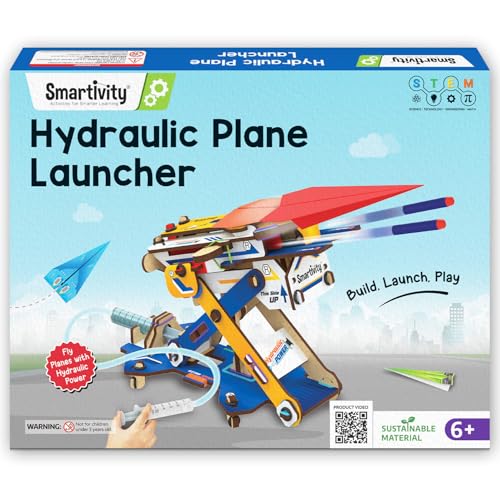
Blast off into DIY fun! Build this eco-friendly, screen-free toy launching paper airplanes, nurturing creativity & STEM skills. Dig deeper now!
$27.99
Price and availability are accurate as of 10/02/2026 03:34 pm GMT and are subject to change.
This kit is a great fit for tweens who love to build something that moves, then tweak it to go farther or fly straighter. It also works well in small clubs or sibling builds where one person assembles while the other tests and logs results.
We picked it because it blends a hands-on build with real physics. Kids see how changing angle, force, and design affects flight and distance. The 2-in-1 format keeps interest high. Swap between airplane and dart launching to compare what works and why. It is screen-free and uses eco-friendly materials, which parents tend to appreciate.
There are trade-offs. The build requires careful alignment and patience. If things feel off, performance will show it. Launch power and accuracy depend on technique, so expect some trial and error. You also need a clear area to test, and paper flyers may wear out with use.
Tip: turn testing into a mini challenge. Mark a safe range lane, try three airplane folds, and log distance and accuracy. Adjust angle a few degrees at a time and note the effect. Keep spare paper and a simple notebook nearby so kids can iterate fast and see their progress.
3. COBFDHA 120-Piece Solar Robot STEM Kit for Kids 8–12
Best first solar robots
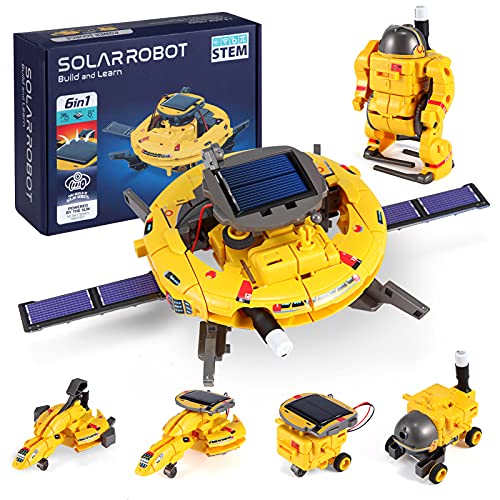
Build 6 moving robots—powered by sun or battery. Fun STEM kit grows problem-solving and confidence, with clear instructions and sturdy parts. Great for ages 8–14.
$19.99
Price and availability are accurate as of 10/02/2026 12:10 am GMT and are subject to change.
For middle schoolers who like to build and rebuild, this multi-model solar kit is a gentle on-ramp to real-world engineering. It is approachable for an 11-year-old, yet still satisfying for a curious 13- or 14-year-old who wants to tinker without a screen.
We picked it because it balances guidance and challenge. The instructions are clear enough for independent work, and the parts feel sturdy, so kids can assemble and take apart the six robots without fear of breaking a key piece. The option to use sun or battery means the fun is not at the mercy of the weather, which keeps momentum going.
Trade-offs are mostly about depth. There is no coding layer, and the builds are capped at six designs. Solar performance also depends on bright light. If your tween already flies through advanced kits, this may feel like a warm-up rather than a capstone.
Tip: start with a simpler model to learn the parts, then move to the trickier builds. Test solar mode near a bright window or outdoors at midday. Encourage kids to narrate what changed when they swap parts, so they link design choices to motion in a concrete way.
4. Build-Your-Own Solar Car STEM Kit (Ages 8–12)
Best Great starter solar kit

Spark creativity with this 4-in-1 STEM kit! Build solar & wind cars, a plane, and an electric fan together. Perfect for family fun and inspiring young inventors.
$14.99
Price and availability are accurate as of 10/02/2026 05:51 pm GMT and are subject to change.
If you have an 11 or 12 year old who is curious about renewable energy but not ready for a complex robotics kit, this is a sweet on-ramp. It includes four approachable builds, so kids can make a solar car, a wind car, a plane, and a small electric fan without getting stuck on dense instructions. We like it for siblings too, since there are multiple ways to share and swap projects.
We picked it because variety matters at this age. The mix of solar and wind projects helps kids notice how energy gets converted to motion, and the quick wins keep them motivated. It is friendly for short sessions after school and makes a great weekend family build.
The trade-off is depth. Older or already-experienced builders may polish off each model fast and look for more challenge. Performance in solar mode also depends on bright light, so cloudy days can be underwhelming.
Tip: set up a simple test track near a sunny window or a bright lamp and time each run. Try small tweaks like panel angle or fan placement and record what changes. Turning it into a mini design challenge stretches the learning without adding complexity.
5. Build 14 Solar Robots – STEM Kit for Kids 8–12
Best starter solar kit

Unleash creativity with the 14-in-1 Solar Robot Kit! Switch between fun robots powered by sun or battery. Perfect for kids 8+, sparking imagination and learning.
$19.99
Price and availability are accurate as of 10/02/2026 02:07 am GMT and are subject to change.
If your middle schooler is new to hands-on STEM, this 14-in-1 solar robot kit hits a sweet spot. It is ideal for kids who like to tinker, rebuild, and try lots of ideas without getting bogged down in code or complex tools. We also like it for siblings or small groups who want fast, shareable projects.
We picked it because the variety keeps kids exploring. Being able to switch between solar and battery power invites real cause-and-effect thinking about energy. Rebuilding across the 14 models nudges them toward design habits like testing, tweaking, and trying again.
There are trade-offs. The builds are straightforward, so older or highly advanced kids may crave more challenge. Movement depends on bright light, and some pieces take careful handling. Expect modest motion and more learning through iteration than through raw performance.
Tip: sort parts before you start and work near a sunny window or head outside for testing. Have your tween note how panel angle changes performance, then challenge them to redesign one model for smoother movement or longer runs.
6. Build Your Own FM Radio STEM Kit (Classic Wood)
Best First Radio Kit

Build your own FM radio—no soldering! Auto-scan 88–108MHz, clear reception, retractable antenna. A fun, screen-free STEM gift for kids or curious adults. Want to see how?
$12.99
Price and availability are accurate as of 10/01/2026 09:24 pm GMT and are subject to change.
This is a sweet spot pick for music-loving tweens, club projects, and any kid who asks how radios actually work. It is also fun for a parent or grandparent to build alongside. Screen-free, hands-on, and satisfying when the first station comes through.
We picked it because the build is approachable without feeling babyish. No soldering lowers the barrier, but you still assemble a real FM receiver with auto-scan across 88 to 108 MHz. The retractable antenna and clear reception make the payoff immediate. The classic wood finish gives it a timeless look and invites a bit of personalization.
The trade-offs are worth noting. Auto-scan is simple, but there is no fine manual tuning. It is FM only, and reception will vary by room and by how strong your local stations are. Since there is no soldering, it is less of a deep dive into circuit design than a breadboard kit.
Tip: fully extend the antenna and test near a window, away from Wi-Fi routers and laptops. Start by scanning for the strongest local station, then try different rooms and antenna angles. Turn it into a mini experiment by logging signal clarity in each spot and talking about why location matters.
7. Solar-Powered STEM Robot Kit for Kids 8–12 (120 Pieces)
Best solar starter
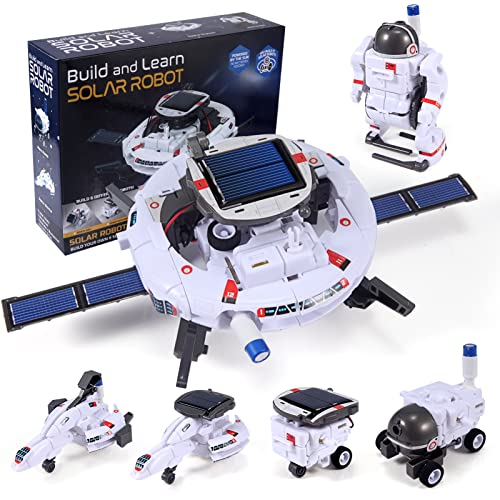
Build 6 land-roving robots powered by sun or battery—hands-on STEM that sparks curiosity and problem-solving. Sturdy pieces, clear guides. Curious? Take a look.
$24.99
Price and availability are accurate as of 10/02/2026 01:31 am GMT and are subject to change.
If your middle schooler is just getting into robotics, this 120-piece kit is a friendly on-ramp. It is ideal for the 11 to 12 crowd or any teen who wants a confidence boost with hands-on building. The six land-roving models offer variety without feeling overwhelming.
We picked it because the builds run on sun or battery, which keeps the experience moving even on cloudy days. Sturdy parts and clear guides mean kids can follow along, make a mistake, back up, and try again. That cycle of test and tweak is exactly what we want in a first robotics kit.
There are trade-offs. Older or more advanced 14-year-olds may outgrow the challenge. Solar mode needs bright light to perform well, and the models are land-only. Still, the mix of flexibility and structure hits a sweet spot for newer builders.
Practical tip: start a first build on battery power to check motion and alignment, then switch to solar outside at midday to compare performance. Keep the pieces sorted by type between builds so those six models come together faster the second time.
8. DIY Walkie-Talkie STEM Kit for Kids 6+
Best First Radio Kit
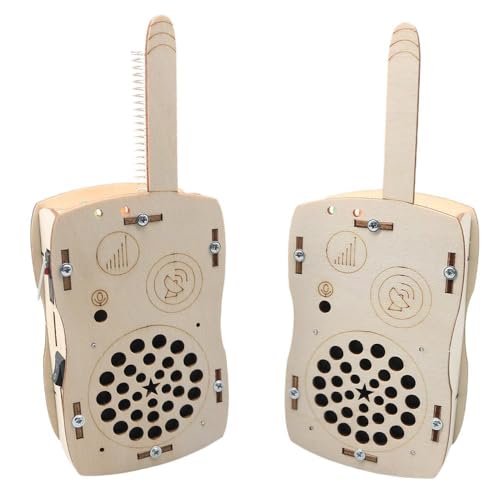
Curious minds can build real working walkie-talkies—no soldering, kid-friendly assembly, and paintable wood panels. Learn circuits, then chat across the room.
$14.99
Price and availability are accurate as of 10/02/2026 01:25 pm GMT and are subject to change.
Who it’s for: middle schoolers who want a hands-on introduction to electronics and a gadget they can actually use. It also suits siblings or clubs where building in pairs makes the activity more social.
Why we picked it: this kit connects the dots between circuits and real-world communication. No soldering keeps frustration low, and the paintable wood panels add a maker vibe that invites ownership and design thinking. Build it, switch it on, and you get instant feedback the first time you chat across the room.
Trade-offs: older or highly experienced builders may find the circuit a bit basic. Range is modest, so think room-to-room testing rather than outdoor adventures. If you’re chasing deep theory, this is more gateway than graduate course.
Tip: frame it as a mini project cycle. Sketch the circuit flow before assembly, personalize the panels with paint or a team name, then run a quick test plan in different rooms and log clarity. It turns a simple build into a mini engineering sprint with design, test, and iterate.
9. Butterfly EduFields 30-in-1 STEM Kit: Electricity & Magnetism Projects (Ages 8–13)
Best electricity starter

Hands-on kit with 30+ electricity & magnetism projects—build a DC motor, magnetic crane, and more. 100+ parts + step-by-step guides make STEM fun for ages 8–12. Take a look.
$37.97 Was $39.97 Save 5%
Price and availability are accurate as of 10/02/2026 08:23 pm GMT and are subject to change.
If your middle schooler learns best by making things move, this is a friendly on-ramp. It lands in the sweet spot for upper elementary through early middle school, with projects that turn abstract ideas into motion you can see and hear.
We picked it because the variety is real. With 30+ electricity and magnetism projects and over 100 parts, kids get quick wins like a working DC motor and a magnetic crane. The step-by-step guides are easy to follow, so they can build after school without a long setup. It is a pure hands-on kit, which makes it great for confidence building.
The trade-off is depth. Some activities revisit the same core ideas, and older or advanced kids may want more open challenges. This is not a coding robot or a long-term platform. Think of it as a solid lab for fundamentals rather than a full engineering ecosystem.
Tip: sort the small parts into labeled snack-size bags or a compartment box before you start. For older kids, turn a cookbook build into a challenge. Can they tweak the motor for smoother spin, or adjust the crane to lift a bit more by refining their design? That shift from following to optimizing is where the learning sticks.
10. Yutin 5-in-1 Wooden STEM Kits for Kids – 3D Engineering Puzzles for Ages 8–12
Best for 14+

Build a mini amusement park—Ferris wheel, carousel, windmill, fiber optic lamp, star nightlight. Hands-on STEM fun that teaches motors and lights, paintable too. Learn more.
$19.99
Price and availability are accurate as of 10/02/2026 03:10 am GMT and are subject to change.
This one is perfect for middle schoolers who like to make things they can proudly display. If your kid is artsy and hands-on, the wooden parts and paintable surfaces hit that sweet spot between craft and engineering.
We picked it because the 5-in-1 lineup feels like a mini amusement park: Ferris wheel, carousel, windmill, fiber optic lamp, and a star nightlight. Each build offers motion or glow, so kids get a real feel for basic motors and simple lighting. The wooden components invite decorating, which keeps older tweens engaged beyond the final screw turn.
The trade-off is complexity. It is simpler than robotics or deep electronics kits, so 13–14 year olds may assemble it quickly. Still, there is satisfaction in getting clean motion, choosing a color scheme, and turning each piece into room decor that actually does something.
A quick tip: before painting, sketch a theme for the whole “park” so the set feels cohesive on a shelf. For a STEM twist, time how many rotations the Ferris wheel and carousel make in a minute and compare. It is a fun way to turn a display piece into a mini experiment.
11. Lucky Doug Solar-Powered STEM Robot Kit for Kids 8–13
Best starter solar kit
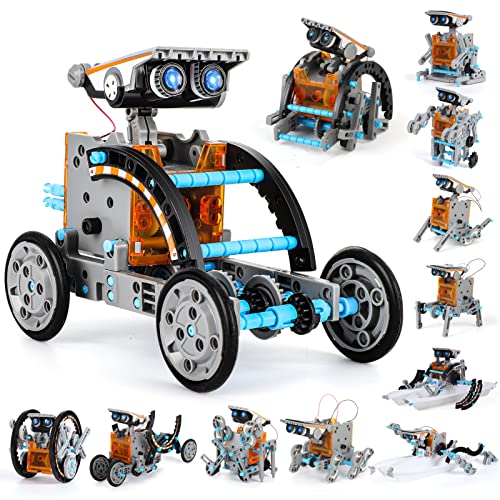
Build 12+ solar-powered robots that crawl, roll, and float—no batteries needed. Clear instructions make it fun for ages 8+. Want a hands-on STEM project?
$17.99 Was $19.99 Save 10%
Price and availability are accurate as of 10/01/2026 09:59 pm GMT and are subject to change.
Best for curious tweens who want an approachable first step into solar robotics. If your middle schooler likes to tinker and rebuild, this kit delivers lots of quick wins without the need for batteries or programming.
We picked it because the 12+ models offer real variety. Kids can make robots that crawl, roll, and even float, all powered by a small solar panel. The instructions are clear, so an 11 or 12 year old can follow along and actually finish builds, which builds confidence and invites experimentation.
There are trade-offs. Performance depends on bright sunlight, so indoor play is limited without a sunny window. The parts are lightweight and the motion is modest, so older teens looking for speed or complexity may want something more advanced. Expect some fiddly connections during assembly.
Practical tip: test your build outside or by a bright window and angle the panel toward the sun. Start with a rolling model to check the drivetrain, then tackle a crawler or floater. Keep pieces sorted between builds so reconfiguring is fast and fun.
12. 13-in-1 Solar-Powered Robot Kit for Kids 8–12
Best for beginners

Spark creativity with the 13-in-1 Solar Robot Kit! Kids build versatile robots that move on land or water, perfect for fun STEM learning and endless imagination.
$14.99 Was $19.99 Save 25%
Price and availability are accurate as of 10/02/2026 02:19 pm GMT and are subject to change.
If you are shopping for the younger side of the middle school crowd, this 13-in-1 solar robot hits a sweet spot. It is great for curious beginners who want lots of build variety without jumping straight into coding. We have seen it keep 11 and 12 year olds busy on weekends, and it doubles as a nice bridge kit for siblings to explore together.
We picked it for its flexibility. Being able to reconfigure into many land and water designs keeps the learning loop active. Kids get fast feedback from the sun as a power source, then tweak the build, try again, and see what changed. That constant iterate-test cycle is exactly the kind of hands-on thinking we love.
Trade-offs come with solar power. It needs bright, direct light to move well, so indoor lamps often disappoint. Motion can be modest, and older teens who crave sensors or programming may outgrow the challenge after a few builds. Think of it as an approachable launchpad rather than a long-term robotics platform.
Tip: take it outside at midday for best results, and start with a simple land build before trying a water-ready design. Keep a short build journal so kids can note what improved performance and what did not. That small habit turns play into real STEM practice.
FAQ
Setup and safety
Q: How much adult help do tweens need to get started?
A: We plan to be hands-on for the first session. Ages 11 to 12 often need help with organization and tool use. Ages 13 to 14 can usually work solo after a quick walk-through. We always supervise cutting, soldering, and strong adhesives, and we use safety glasses.
Q: What basic supplies should we have on hand?
A: Fresh AA or AAA batteries, a small Phillips screwdriver, needle-nose pliers, side cutters, masking tape, small zip bags or trays, a ruler, and safety glasses. For electronics, a 9V battery and a simple multimeter help. For wood models, keep wood glue nearby.
Troubleshooting and maintenance
Q: Our solar robot will not move. What should we check first?
A: Test in direct sun, angle the panel toward the light, and remove shadows. Check that gears are fully seated and not rubbing the frame. Confirm motor wire polarity and tight connections. Spin the wheels by hand to feel for friction. Indoors, a bright lamp may help, but many panels need real sunlight.
Buying and value
Q: How do we pick the right difficulty for ages 11 to 14?
A: We match the kit to interest first, then check required tools, build time, and whether soldering is needed. Open-ended sets are great for tinkerers. If unsure, start one step easier for a quick win, then level up to a more advanced kit.
If there is a single pattern we saw with middle schoolers, it is this. They want to do real work. The best STEM toys at 11 to 14 feel like tools. They give clear wins, hit real concepts, and still leave room to tinker.
Your next step is simple. Match the kit to the kid. Builders who love moving parts tend to light up with robotics or mechanical models. Tinkerers who like cause and effect do well with electricity and magnetism sets. Curious minds who ask why a valve works will enjoy hydraulics. Those who want to see a project on their shelf may prefer wooden mechanical puzzles.
Keep it right sized. Pick a kit with a low skill floor and a high ceiling. Plan one short session to get a first success, then stretch with optional challenges. Set up a steady workspace, practice safe habits, and make troubleshooting part of the fun.
Two caveats before you click buy. Solar kits can be finicky indoors, so have a lamp or a hand crank plan B. And anything with solder, neodymium magnets, or tiny fasteners calls for supervision and a clear storage plan, especially around younger siblings or pets.
If you have 60 minutes this weekend, start here
Create a tiny maker space
- Clear a 2 by 3 foot surface.
- Add a small parts tray, masking tape, and a notebook.
- Put safety glasses within reach. Plug in a task light.
Run a mini design challenge
- Give a prompt like Move a coin across the table without touching it.
- Allow 10 minutes to sketch and list materials.
- Allow 20 minutes to build using household items if you do not have a kit yet.
Do a micro build with a real kit
- Pick one model or one circuit from the manual.
- Read the steps together out loud once, then build without rushing.
- Test as you go. If it fails, change one thing at a time and retest.
Capture learning and next steps
- Snap a photo and write three lines. What worked. What failed. What to try next.
- Put unfinished parts in a labeled bag so you can restart fast next time.
- Schedule your next 45 minute session before you clean up.
Quick action checklist
- Choose one category that matches interest and patience.
- Set a time box for a first win. Aim for 20 to 40 minutes.
- Prep tools and safety gear in one bin.
- Use a build log to track fixes and ideas.
- Add a stretch goal that uses the same parts in a new way.
Decision recap
- Short attention span or first timer. Pick a snap circuit or single-model kit with clear wins in under 30 minutes.
- Loves motion and gears. Go for a mechanical model or multi-model robotics set.
- Curious about how forces work. Hydraulics and pneumatics builds are a great fit.
- Wants display-worthy results. Wooden models or tidy desktop builds are ideal.
- Club or classroom use. Favor kits with spare parts, resettable builds, and clear lesson flows.
Edge cases to consider
- Learners with fine motor challenges may prefer larger connectors and fewer tiny screws. Look for kits that use tool-free joins or color coded parts.
- If sunlight is limited, pick kits that run from batteries or USB and treat the solar panel as a bonus experiment.
- If you have toddlers in the home, avoid kits with loose magnets or very small metal bearings. Choose larger-format pieces and locked enclosures.
Frequently asked questions
How do I gauge the right difficulty without seeing the kit in person?
Scan the manual online if possible. Look for step count, part count, and tool list. Under 20 steps with no special tools is a gentle start. Over 60 steps or any soldering is better for teens who have built before. If in doubt, pick the easier path and add challenges later.
What if my tween loses interest after the first build?
Shrink the scope. Set a 20 minute timer and aim for one small win. Offer a twist like build it blindfolded while a partner reads steps. Or change the goal. Can we make it faster, quieter, or smaller. End on a success and come back fresh.
Is soldering worth it at this age?
Yes, with care. Start with practice boards and a fume safe area. Teach heat control and wire prep before touching the main kit. If soldering adds stress, use breadboards or snap systems first, then revisit soldering later.
Are solar kits a bad idea if we live in an apartment?
Not at all, but manage expectations. Strong desk lamps or sunny windows can work, yet performance varies. Treat solar as a variables lab. Angle, shade, and temperature matter. Keep a backup power option so tests do not stall.
What should a classroom buy first?
Pick durable kits with resettable builds and clear lesson scaffolds. Stock extra consumables like tubing, syringes, wires, and fasteners. Create rotating stations by theme. One table for circuits, one for mechanisms, one for coding or sensors. Plan for storage with labeled bins and a check-in sheet.
Can we mix parts from different kits?
Often yes for basics like gears, axles, and wires. Watch for mismatched sizes and thread types. Keep a conversion bag with adapters, tape, zip ties, and heat-shrink for safe joins. Do not mix magnets near sensitive electronics.
How do we store everything so builds do not vanish midstream?
Use clear boxes by category. One for motion parts. One for power and control. One for fasteners. Bag each in-progress build with a photo and a short note. Keep a spare parts jar for mystery bits and check it weekly.
We hope this gives you a confident path. Pick one kit that fits your kid, schedule a single hour, and aim for one clear success. Curiosity grows fast when wins are visible and the next step is close at hand.