


If you have an 8 to 10 year old, you know the sweet spot. They want real tools and real results, but they still melt down if a gear slips for the third time. This guide is for families who want STEM toys that actually get used, not just opened once and left to sulk on a shelf.
We focus on kits and games that create a fast first win, teach a core idea well, and then invite kids back to rebuild or redesign. We judge on clarity of instructions, durability of parts, time to first success, and how easy it is to level up. We also look hard at storage footprint, battery needs, and whether replacement parts are easy to improvise from a junk drawer.
What matters most at this age is momentum. Kids need a satisfying result in the first 20 to 30 minutes, then a path to keep tinkering. If a kit requires specialized tools, a perfect sunny day, or constant adult rescue, it tends to stall.
Two honest caveats. Some excellent toys expect a tablet or phone, which may be an issue for shared or locked-down devices. And a few categories still need adult eyes for safety, like soldering or anything that foams over a countertop.
Do this first: ask your kid to pick two verbs they enjoy right now. Build and race. Code and draw. Tinker and talk. Use those verbs to choose a category below, then check how much time and supervision you can offer this week.
Quick picks by need
For builders who like to race or crash-test
Engineering kits that turn into driveable cars hit a nerve with this age. Look for sturdy gearboxes, clear wheel alignment diagrams, and a remote with proportional steering if possible. The best sets let kids reconfigure the chassis after the first lap, not just swap a spoiler.
For sun-powered tinkerers who love novelty
Multi-in-one solar robot kits are great for curious hands that like to see motion rewards. Check that the solar panel is sized for real-world light, not only direct noon sun. Bonus if the kit includes a hand crank or battery option for cloudy days so play does not stall.
For screen-curious kids who want to make a robot obey
Intro coding robots that you build, then control with a simple app, can bridge play and programming. We look for block-based coding with immediate feedback, sturdy connectors that survive rebuilds, and offline play modes for device-light households. A quick calibration routine is a plus.
For quiet problem solvers who enjoy solo wins
Standalone logic games like marble mazes or circuit puzzles give fast dopamine without a screen. Prioritize sets that include a graduated challenge booklet, self-checking solutions, and pieces that do not roll under a couch. These thrive during homework breaks and car rides.
For kids who want to talk across the yard or wire things up
Hands-on electronics kits that build a working gadget, like a walkie-talkie or basic radio, sell the magic of circuits. Look for snap-together components or clear soldering alternatives, labeled parts, and diagrams that show signal flow. Expect light adult help on the first build.
For kitchen chemists who respect the mess
Choose chemistry sets that focus on visible reactions, safe reagents, and clear clean-up steps. We favor kits with pH strips, droppers, and repeatable experiments that do not require special grocery runs. Avoid sets that promise fireworks and deliver a stained countertop.
For families who want variety without analysis paralysis
General-purpose STEM project boxes mix small builds across topics. The best offer one quick win per activity, minimal tools, and parts you can reuse for fresh designs. Check that each project teaches a single idea well, not ten ideas poorly.
How to choose the right STEM toy and avoid shelf clutter
Fit the frustration curve, not just the age label
Age ranges on boxes are rough. Think about your child’s tolerance for retries and reading diagrams. If they bail after two failed attempts, aim for kits with one-hour builds and visible motion. If they love to iterate, pick sets with open-ended rebuild paths and spare parts.
Demand a first win in 30 minutes
Scan the manual or video preview before you buy. Can a patient 9 year old hit a moving result within half an hour, like rolling wheels, blinking lights, or a solved puzzle? Time to first success predicts whether the kit gets opened again on a school night.
Power and parts reality check
List what the toy needs to run. Batteries, a sunny window, a tablet, a Phillips screwdriver, or glue. If any of those are scarce in your home, choose a different kit. Prefer parts that are hard to lose, labeled clearly, and easy to replace with household items.
Space, noise, and cleanup
Measure where the kit will live. If it needs a clear table for a week, plan for that. Apartment neighbors may not love high-torque RC testing at 8 p.m. Chemistry that stains needs a tray and a sink nearby. A small plastic bin for pieces saves Saturday morning searches.
Safety and supervision, in real life
Read the fine print for small parts, sharp edges, and heat sources. Under-3 siblings and tiny screws do not mix. If a project needs soldering or acids, schedule a weekend session and treat it like a mini workshop. Clear rules make these experiences feel grown-up, not risky.
Action step: set a 20 minute timer and try a dry run with your child using any kit you already own. Watch where they hesitate. That single observation will tell you whether your next toy needs clearer diagrams, chunked steps, or a more dramatic payoff.
Quick Comparison
| Product | Best for | Biggest strength | Biggest trade-off |
|---|---|---|---|
| STEM Remote Control Car Kit & Wood 3D Puzzle for Kids 8–13 | Tinkerers who want to build and drive a real RC car. | Hands-on build that becomes a functional vehicle. | Some steps are fiddly and may need adult help. |
| Create & Code Robot Kit – Build and code a robot (Ages 6–12) | First-time coders who like to build before programming. | Clear path from assembly to simple coding. | Coding depth is limited compared to pro kits. |
| ThinkFun Gravity Maze: Marble Run Logic Game for Ages 8+ | Independent thinkers who enjoy logic challenges. | Progressive puzzles that build spatial reasoning. | Less collaborative than build kits. |
| 13-in-1 Solar-Powered Robot Kit for Kids 8–12 | Sunshine-loving builders who want variety. | 13 reconfigurable solar models to explore motion. | Performance depends on strong light. |
| Build-Your-Own Solar Car STEM Kit (Ages 8–12) | Car fans curious about solar power. | Immediate payoff when the sun makes it go. | Works best outdoors or under a bright lamp. |
| Sillbird 12-in-1 Solar Robot STEM Kit for Ages 8-13 | Kids who like to rebuild the same kit many ways. | Flexible 12-in-1 designs teach mechanisms. | Rebuilds can be time consuming. |
| DIY Walkie-Talkie STEM Kit for Kids 6+ | Budding electricians who want a useful gadget. | Real communication device built from parts. | Small components require patience and supervision. |
| Poraxy Build-and-Drive RC Car Wooden STEM Kit for Kids 8–13 | Builders who want a wood-based RC project. | Satisfying chassis build that actually drives. | Precise alignment is needed for smooth steering. |
| Poraxy 5-in-1 STEM Kit – Wooden 3D Car Projects for Ages 8-12 | Short projects spread over several afternoons. | Five distinct car builds keep interest high. | Each model is simpler than a full RC build. |
| Klever Kits 6-in-1 Electric Robot STEM Kit for Kids 8-13 | Indoor robot fun without waiting on sunshine. | Reliable powered motion for experiments. | Power management limits run time. |
| DIY STEM Project Kits for Ages 5–14 | Families who want a flexible project box. | Mix-and-match activities across ages 5–14. | Project quality can vary by selection. |
| National Geographic Magic Chemistry Kit – 10 STEM Experiments (Ages 8–12) | Showy science that still teaches real chemistry. | Ten guided experiments with clear results. | Materials get used up quickly. |
1. STEM Remote Control Car Kit & Wood 3D Puzzle for Kids 8–13
Best first RC build
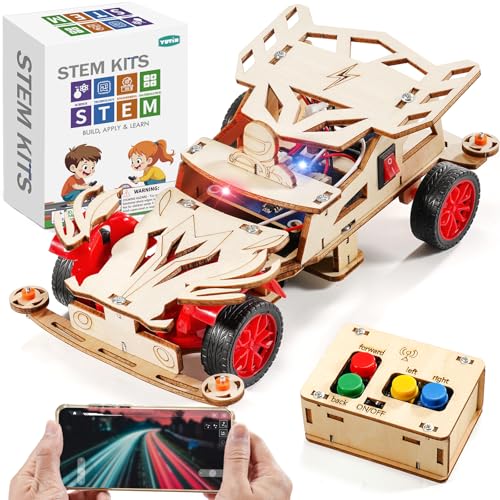
Build a real wooden RC car—kids 8–12 learn STEM by assembling, decorating, then driving it. Safe, smooth pieces and clear instructions make it a fun project to do together.
$13.99 on Amazon
Price and availability are accurate as of 04/07/2026 04:59 am GMT and are subject to change.
If your kid loves building things they can actually use, this wooden RC car kit hits the sweet spot. It is ideal for ages 8 to 12 who like hands-on projects, cars, and a bit of art time. We like it most for first-time builders who are ready to follow directions but still want room to personalize.
We picked it because the learning arc is so satisfying. Kids assemble a real, drivable car, decorate it, and then see their work move across the floor. The smooth wooden pieces and clear instructions make it approachable, and there is enough tinkering to feel like real engineering without being overwhelming.
There are trade-offs. This is about building and learning, not speed. Expect a steady cruiser rather than a zippy racer. Some steps can be finicky for small hands, so plan for light adult support and a bit of patience, especially when lining things up so it tracks straight.
Tip: set up a clean work surface and sort the parts before you start. Let kids design and decorate the body panels before final assembly, then test-drive on a smooth floor to dial in the steering. The first ride after that last step is a big confidence booster.
2. Create & Code Robot Kit – Build and code a robot (Ages 6–12)
Best Coding u0026 Robotics

Unleash your child’s creativity with this 6-in-1 STEM kit! From building robots to bubble machines, it’s perfect for fun learning and family bonding. Discover more!
$19.99 on Amazon
Price and availability are accurate as of 04/06/2026 09:40 pm GMT and are subject to change.
Best for curious 8–10-year-olds who want a first real taste of robotics and coding without getting overwhelmed. If you have siblings in the 6–12 range, it scales well, so everyone gets a turn to build and try something new.
We picked it because the 6-in-1 format keeps the experience fresh. Kids build a working robot, then switch gears to playful options like a bubble machine, which adds a splash of science to the day. It strikes a friendly balance between hands-on building and simple coding, so kids see cause and effect quickly and feel proud of the results.
Trade-offs to know: the coding side is introductory, which is perfect for beginners but may feel basic for kids who already code. Some builds are a bit fiddly and benefit from patient hands and a calm table. Expect to pitch in for alignment and the first round of reading the guide.
A quick tip: start with the simplest robot to learn the parts, then move to the more playful builds. Keep small pieces in zip bags or a divided tray, and set a goal for each session, like testing one change at a time. That rhythm keeps momentum high and frustration low.
For a related angle that supports this topic, see playful builds. Keep small pieces.
3. ThinkFun Gravity Maze: Marble Run Logic Game for Ages 8+
Best screen-free logic

Join 50M+ families with Gravity Maze! 60+ puzzles that boost critical thinking and STEM skills. Perfect for kids 8+, easy to start, and tons of fun. Discover more!
$22.75 on Amazon
Price and availability are accurate as of 04/06/2026 12:41 pm GMT and are subject to change.
If your kid loves brainteasers and hands-on building, this is a sweet spot. It’s aimed at ages 8 and up, starts simple, and scales to real head-scratchers. It works well for quiet time, homework breaks, or a five-minute challenge before dinner.
We picked it because the design gets kids thinking in 3D without needing screens or a giant setup. The 60+ puzzles give a clear path from beginner to advanced, and the marble provides instant feedback. If the marble won’t roll to the target, you redesign and try again. That loop is both satisfying and educational.
Trade-offs: this is a logic game first, marble run second. It’s not about sprawling tracks across the living room. It also leans single-player, so siblings may need to alternate or collaborate. And like any set with small parts, you’ll want to corral pieces.
Tip: make it a “challenge of the day.” Leave one puzzle set up on a tray and let your kid take a crack when they pass by. For cooperative play, one of you places the starting towers and the other solves, then swap roles.
4. 13-in-1 Solar-Powered Robot Kit for Kids 8–12
Best Solar Starter

Spark creativity with the 13-in-1 Solar Robot Kit! Kids build versatile robots that move on land or water, perfect for fun STEM learning and endless imagination.
$19.99 on Amazon
Price and availability are accurate as of 04/06/2026 10:59 am GMT and are subject to change.
Best for curious builders who like to tinker, try, and rebuild. If your 8 to 10 year old is fascinated by how sunlight can power motion, this kit turns that spark into real-world play. The land and water options also make it a solid pick for kids who love variety.
We picked it because the 13-in-1 format invites exploration. Kids can see how changing shapes and mechanisms changes movement, then test how sunlight and panel angle affect performance. The land and water builds broaden the learning, pushing kids to think about stability and propulsion in different settings.
There are trade-offs. Performance depends on strong light, so cloudy days and dim rooms can disappoint. Some models feel delicate, and the diagrams may take a minute to decode. Water builds in particular reward patience, since balance matters.
Tip: start with a simple rolling design on a sunny day to build confidence. Sort parts into small cups so nothing wanders. For water models, use a large basin or tub before heading to a pond. If you are indoors, a very bright lamp can help test builds, though results will vary.
5. Build-Your-Own Solar Car STEM Kit (Ages 8–12)
Best intro to solar

Spark creativity with this 4-in-1 STEM kit! Build solar & wind cars, a plane, and an electric fan together. Perfect for family fun and inspiring young inventors.
$12.74 on Amazon
Price and availability are accurate as of 04/06/2026 02:45 pm GMT and are subject to change.
If your kid is curious about how sunlight and wind can power real movement, this 4-in-1 kit lands right in the sweet spot. It suits builders who like to see quick wins, then try another variation. Families who prefer short, satisfying projects over marathon sessions will get the most out of it.
We picked it because the variety is built in. Kids can make solar and wind cars, a plane, and an electric fan, which means they explore different ways to turn energy into motion. It is hands-on without being overwhelming, and it naturally prompts questions about why one design moves faster than another and how angle and light affect performance.
The trade-offs are about conditions and longevity. It shines on bright days, but cloudy afternoons can stall testing. And while the builds are fun, this is more about discovery than long-term toy play. Expect a learning experience with bursts of wow rather than a new everyday driver.
Practical tip: start with the simplest car, then test at midday in direct sun. Mark a start line on the sidewalk and try small tweaks like panel angle or wheel alignment between runs. Keep parts in a shallow tray, and snap a quick photo before disassembly so the next build goes faster.
6. Sillbird 12-in-1 Solar Robot STEM Kit for Ages 8-13
Best solar starter kit
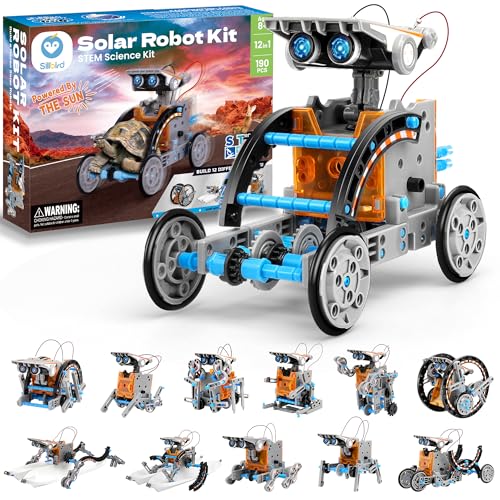
Explore 12 unique robots to build with your child! Solar-powered, STEM-focused fun that boosts creativity and teamwork. Perfect gift for curious kids 8+.
$19.99 on Amazon
Price and availability are accurate as of 04/06/2026 12:35 pm GMT and are subject to change.
This is a solid pick for kids who love to tinker and want variety. With 12 unique robots to explore, it fits curious builders who enjoy trying new configurations and seeing how parts come together in different ways. It is also a good fit for families who like a shared weekend project.
We picked it because the solar-powered builds make energy more than a word in a textbook. Your child can see sunlight turn into motion, which sparks real questions and real pride. The variety of designs gives you room to grow skills across several sessions instead of burning through a single build.
There are trade-offs. It shines in bright conditions, so cloudy days can slow play. Some pieces are small, which can challenge kids who prefer chunkier builds. Expect to offer a little guidance at first, especially for 8-year-olds transitioning from simpler kits.
Practical tip: start with one of the easier robots, test it near a bright window or outdoors, and talk about how the angle of the sun changes performance. Keep small parts in little bowls to avoid mix-ups between builds, and celebrate the rebuild. That repeat cycle is where confidence grows.
7. DIY Walkie-Talkie STEM Kit for Kids 6+
Best first electronics
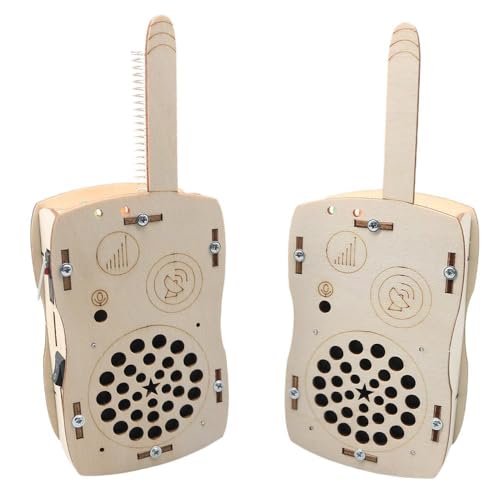
Curious minds can build real working walkie-talkies—no soldering, kid-friendly assembly, and paintable wood panels. Learn circuits, then chat across the room.
$14.99 on Amazon
Price and availability are accurate as of 04/07/2026 01:00 am GMT and are subject to change.
If your 8 to 10 year old wants a project that actually does something, this is a sweet spot. They get to assemble a real pair of walkie-talkies, learn what a simple circuit is, then use them for games and missions around the house. The paintable wood panels add a crafty twist that art-minded kids love.
We picked it because it turns abstract electronics into an immediate win. No soldering means less friction and more focus on how components link up. The moment they press the button and a friend answers back from the next room, the concepts click. The wood shells also make the build feel like a keepsake, not a disposable toy.
There are trade-offs. Reliability depends on careful placement and snug connections, so patience matters. Expect a bit of troubleshooting if sound cuts in and out. It is a great gateway to electronics, but it will not replace a full coding platform or a modular circuit system for long-term exploration.
Practical tip: lay out the parts in bowls, label wires as you go, and test functionality before painting and final assembly. After building, make call signs and set up a scavenger hunt or “base camp” game to keep the radios in play beyond day one.
8. Poraxy Build-and-Drive RC Car Wooden STEM Kit for Kids 8–13
Best DIY RC Car

Build it, paint it, then race it—this 4WD RC kit hits 160 ft with lag‑free control and auto-centering steering. Fun STEM learning and no signal clashes with friends.
$14.99 on Amazon
Price and availability are accurate as of 04/07/2026 05:03 am GMT and are subject to change.
For the kid who wants to make something real and then put it to the test, this wooden RC car hits the sweet spot. Makers who like 3-D puzzles, hands-on builds, and a chance to show off their paint job will get a kick out of it. It suits confident 8 to 10 year olds who can follow steps and love customizing.
We picked it because it is more than a remote car. You assemble a wooden chassis, paint it, then drive a 4WD RC that reaches about 160 feet with lag-free control. The auto-centering steering keeps frustration low and lines straight, and friends can race side by side without signal clashes. That mix of building, creativity, and real driving makes the learning feel natural.
There are trade-offs. Wood does not love high-speed curb hits, so it is not a hobby-grade basher. The build asks for patience, which is part of the lesson but may need a calm afternoon and a little guidance. And while it is quick and capable for a kit, it will not outpace pro RC rigs.
Practical tip: set up a clear table and sort the parts before you start. Build first, then paint so everything still fits right, and let the paint dry fully before the first run. Do your maiden drive in an open area so kids can get a feel for the controls and that straight-tracking steering.
9. Poraxy 5-in-1 STEM Kit – Wooden 3D Car Projects for Ages 8-12
Best screen-free build
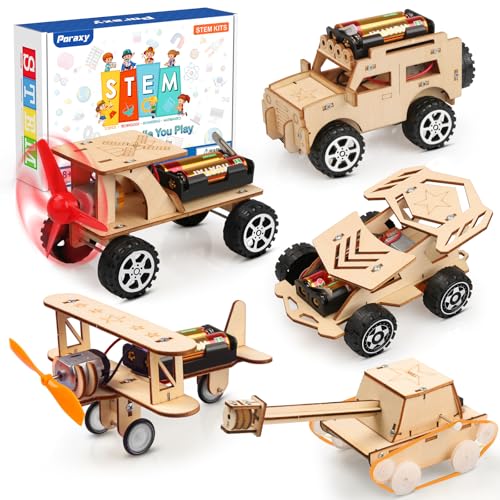
5-in-1 wooden model car kit with laser-cut pieces—kids build, tinker, and paint while picking up real STEM skills. A fun, screen-free pick for ages 8–12. Learn more.
$16.99 on Amazon
Price and availability are accurate as of 04/06/2026 05:02 pm GMT and are subject to change.
If your kid loves to tinker with their hands and proudly display what they made, this 5-in-1 wooden model car kit is a sweet spot. It suits builders who enjoy following steps, testing fits, and then adding personality with paint. We like it for quiet afternoons, small group builds, or a steady parent child project that ends with a shelf-worthy set of cars.
We picked it because the laser-cut wooden pieces feel good to work with and reward careful assembly. The 5-in-1 format gives you multiple builds from one box, so kids practice planning and sequence across different cars. It blends STEM with design, which can hook both the meticulous builder and the artsy kid who wants to customize the finish.
Trade-offs are real. This is a slower, thoughtful build that benefits from organization and patience. Expect small parts, a bit of mess if you paint, and some moments where an adult’s calm nudge helps. If your child wants instant lights and sounds, this probably will not be the favorite.
A practical tip we learned the hard way. Sort pieces into small trays before you start, and test-fit parts before painting to keep joints clear. Thin coats of paint dry faster and help pieces seat properly. Take breaks between subassemblies so attention and accuracy stay high.
10. Klever Kits 6-in-1 Electric Robot STEM Kit for Kids 8-13
Best for variety

6 build-it-yourself robots and gadgets in one kit—hands-on STEM fun that teaches robotics basics, sparks creativity, and leaves display-worthy creations. Great for 8–12.
$15.99 on Amazon
Price and availability are accurate as of 04/06/2026 08:58 pm GMT and are subject to change.
If your kid lights up when things move and whir, this kit is a sweet spot. It suits builders who like to tinker, follow a plan, then tweak it to make it their own. We like it for screen-free afternoons and for kids who are curious about how simple electric motion comes together.
We picked it because six build-it-yourself robots and gadgets in one box means fewer one-and-done projects. Each build teaches a small slice of robotics basics in a way that feels playful. The variety also keeps momentum going. When one model is done, there is a natural next thing to try, and the results are display-worthy.
The trade-offs are typical of multi-build kits. You use the same parts across projects, so something has to come apart before the next thing takes shape. Difficulty is not perfectly even, and a few steps may need a calm hand or a quick assist.
Practical tip: set up a parts tray and snap a photo of each completed build before taking it apart. That makes revisiting favorites easy and encourages your child to imagine upgrades. We like to keep a small “idea card” stack nearby where kids sketch mods or note what they would try differently on the next build.
11. DIY STEM Project Kits for Ages 5–14
Best Physics Kit 8–12

Spark your child’s curiosity with our versatile STEM kits! Featuring 5 exciting models, they’re perfect for hands-on learning and fun. Great for ages 6–12.
$15.99 on Amazon
Price and availability are accurate as of 04/06/2026 12:39 pm GMT and are subject to change.
If your 8–10-year-old wants variety without getting overwhelmed, this versatile kit hits a sweet spot. The five project options give kids room to explore different builds while staying in the comfort zone for upper elementary. It also works well for families with siblings across the 6–12 range.
We picked it because the multiple models encourage experimentation. Kids can build, test, then rebuild a new configuration and compare what changes. That keeps curiosity alive longer than single-and-done kits and helps tie hands-on tinkering to real science thinking.
Trade-offs: it is a broad sampler. You get solid exposure to core concepts rather than a deep dive into any one area. Expect to offer a bit of help on the first setup and manage small parts. There is no coding or app layer here, which will be a plus for some and a miss for others.
Tip: set up a simple tinkering routine. Pick one model for a session, keep a notepad for observations, then rebuild another version next time and compare results. Pre-sorting parts into a few small containers makes the whole experience calmer and faster.
12. National Geographic Magic Chemistry Kit – 10 STEM Experiments (Ages 8–12)
Best Wow Factor

Watch your kids amaze friends and family with magical science experiments! All tools included for hours of fun and learning. Discover the magic now!
$17.99 on Amazon
Price and availability are accurate as of 04/07/2026 04:59 am GMT and are subject to change.
If your kid lights up at the word magic, this kit is a crowd pleaser. It leans into the showmanship that 8 to 10 year olds love, then sneaks in real science. We like it for reluctant learners and for families who want an easy way to turn a rainy afternoon into a mini performance.
We picked it because the premise is simple and engaging. Ten experiments mean enough variety to keep momentum going without turning your table into a full lab. With the tools included, you can open the box and get moving fast, which helps you actually use it rather than let it sit.
There are trade-offs. The fun is front-loaded, and some activities will be single-use. Expect a little mess and plan to be nearby. Our tip: turn it into a magic show. Pick two or three experiments, practice the patter, and set up a tray to contain spills. Have your child predict what will happen before each reveal, then talk through the why right after the applause.
FAQ
Setup and first sessions
Q: How much adult help do 8–10-year-olds need?
A: Plan 15–30 minutes of hands-on help for the first build. Model how to read diagrams, sort parts, and check steps. Then step back. Handle sharp tools and tricky wiring if needed, but let them drive the build and testing.
Q: What supplies should we keep nearby?
A: AA/AAA rechargeable batteries, small Phillips screwdriver, scissors, masking tape, zip bags, a tablet or phone for app-based kits, and eye protection for chemistry. A clear table and a small parts tray make a big difference.
Buying and fit
Q: How do I pick the right difficulty?
A: Match to what they already do solo. If they breeze through 10+ LEGO sets, they can handle multi-session robotics or electronics. Check build time, tool requirements, and whether the kit includes guided missions plus open-ended challenges. Aim for projects that can finish in 1–2 sittings, then expand.
Safety and troubleshooting
Q: Are STEM kits safe without constant supervision?
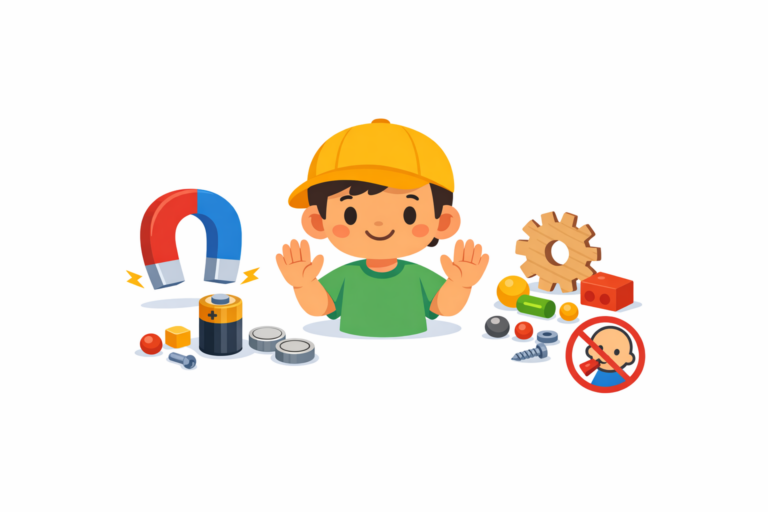
A: Supervise anything with heat, chemicals, blades, or charging batteries. Avoid small magnets if younger kids are around. Ventilate glues and paints. For quick fixes, reseat loose wires, replace weak batteries, and check gear alignment. Store small parts in lidded bins when done.
If we had to boil it down, the best STEM toy for ages 8 to 10 is the one your kid will pick up again tomorrow. Match the kit to what they already love, right-size the challenge, and set them up with a place to tinker without asking permission. That is how curiosity turns into skill.
Start small. Pick one category that fits your child right now. Builders tend to click with engineering kits. Puzzle lovers gravitate to logic games. Budding coders light up with a bot they can assemble and drive. Start there, then expand sideways, not up in complexity.
The next step is to clear the path to use. Charge batteries, label parts, and give them a bite-size goal for day one. Our experience is that 20 minutes of early momentum beats a complex plan every time.
Finally, think long game. A clear bin, a few spare parts, and a Saturday routine keep these kits alive for months. When a project stalls, treat it like a puzzle, not a failure. Adjust the build, simplify the goal, or invite a friend. Fresh eyes often unlock the next step.
Choose the right STEM toy and dodge shelf clutter
Quick decision recap
- If your kid loves to build and crash test: go with a build-and-drive engineering kit or a solar robot with lots of modes.
- If they enjoy puzzles and solo challenges: pick a standalone logic game or a marble maze with progressive cards.
- If screens motivate them and they like to customize: choose a simple coding robot that pairs building with an app.
- If they want walkie-talkie level excitement and to see cause and effect: a hands-on electronics kit is the fastest win.
- If they like kitchen science: pick a chemistry set that uses common ingredients and has clear safety steps.
- If they dabble in everything: a general STEM project box gives variety without a big commitment.
Edge cases and caveats:
- For kids who get frustrated by tiny parts or have fine motor challenges, start with larger-piece engineering kits or logic puzzles with chunky components.
- If screen time is limited at home, lean toward analog builds, solar kits, and marble mazes to avoid app battles.
- For advanced 10-year-olds who crave challenge, choose kits with open-ended expansions or projects that can be rebuilt in many ways.
A week-one action plan
- Clear a small build zone. One table, good light, and a shallow parts tray.
- Unbox together. Sort parts, recycle excess packaging, and label baggies by step or subsystem.
- Do a five-minute power check. Charge batteries, test motors, confirm app installs if needed.
- Pick one tiny win. One mode of the robot, one logic card, one circuit that lights an LED.
- Snap a photo of the first success. Post it on the fridge. Momentum matters.
- Set the next step. Leave the half-built chassis or next puzzle card out in the open.
If motivation dips, try this
- Shrink the goal. One gear train, not the whole car. One puzzle card, not the deck.
- Switch the lens. Ask what works, not what is broken. Celebrate function, not perfection.
- Add a role. Builder and tester. Designer and documenter. Some kids thrive when they can name their part.
- Invite a friend or sibling. Cooperative builds spark energy and light competition.
- Change the constraint. Time-box a 15-minute sprint. Or swap tools. A new screwdriver can make it feel fresh.
Smart add-ons and storage that keep kits alive
Storage that invites play
- Use one clear bin per kit with a photo of the finished build taped inside the lid. It jogs memory and sets a goal.
- Add a shallow parts tray or muffin tin for active builds. Sorting once prevents hours of searching later.
- Keep the current project assembled on a cheap cutting mat. It moves off the table in one lift without losing progress.
- Store instruction books and challenge cards in a zip folder. Nothing kills a build like a lost page.
Low-cost consumables that extend life
- Stock extra AA or AAA rechargeables and a fast charger. Dead batteries are the number one build stopper.
- Keep spare zip ties, masking tape, elastic bands, and a small tube of thread locker. Wobbly parts and slipping gears are common fixes.
- Add a basic tool set sized for kids. Precision screwdriver, small needle-nose pliers, wire cutters, and a magnetic parts cup.
- For chemistry sets, keep common ingredients on hand. Baking soda, vinegar, gelatin, food coloring, and coffee filters get you many extra experiments.
Upgrades and expansions without overwhelm
- For builders, pick one upgrade part that changes behavior. Stickier tires, a different gear ratio, or a simple sensor add-on.
- For coders, unlock one new concept at a time. If they can drive the bot, add loops. Then add a sensor. Then try a timed challenge.
- For logic games, layer in a timer or cooperative play. Take turns proposing the next move or explain the reasoning out loud.
- For electronics, move from snap circuits to breadboards only when curiosity is high. Bridge with a guided project like a night-light or a simple alarm.
Make it routine, not a one-off
- Pick a standing slot. Saturday morning build club or weeknight wind-down. Short and predictable beats rare and epic.
- Rotate categories every few weeks to keep things fresh. Two weeks of building, one of logic puzzles, one of science.
- Celebrate finishes with a tiny demo day. Show the robot run, explain the circuit, or time a marble run. Audience equals motivation.
When to level up
- Signs they are ready: they troubleshoot without prompting, they mod builds on their own, or they outpace the instruction cards.
- Leveling path: go from kit-first to project-first. Ask, what do you want it to do, then pick parts to make that happen.
- Keep the safety line clear. As they move to tools, set rules for cutting, charging, and chemical use. Model it once, then post it near the station.
Before you click away, choose one category and set up that build zone today. Charge the batteries, lay out a shallow tray, and pick a tiny win for tomorrow. If we make the first step easy, the rest follows. And when it clicks, you will see it. Curiosity turns into confidence, one small success at a time.


Leave a Comment