


Choosing a STEM kit should feel exciting, not like guesswork. Kids change fast between ages 2 and 14. What delights a preschooler can frustrate a third grader, and what thrills a tween can look like a pile of parts to a toddler. We built this hub to help you match kit types to a child’s age, curiosity, and learning goals in minutes.
We test kits in homes, classrooms, and after‑school clubs. The sets that stick share a few traits. They meet kids where they are developmentally. They invite repeat play and tinkering. They include clear prompts without taking over the discovery. And they make it easy for us adults to help without running the whole show.
Do this first. Grab a sticky note and jot three things: age, top two interests, and attention span in minutes for a calm afternoon. Add any firm boundaries like screen-free, low mess, or no small parts. Keep this note handy as you skim the sections below.
When we evaluate a kit, we look for specific signals:
- Age and motor fit. Can the hands in question grip, snap, twist, and read the parts and guides?
- Build time vs attention span. Are there meaningful wins in 10, 20, and 40 minutes?
- Reusability. Is it open-ended or a one-and-done set of consumables?
- Instructions and support. Are there pictures, tips, and extensions that make it teachable?
- Safety and mess. Non-toxic materials, sturdy parts, reasonable cleanup.
- Storage and durability. A box that survives a backpack and pieces that do not crumble.
There are real edge cases. Some kids dislike sticky textures, loud motors, or vinegar smells. Emerging readers may stall on text-heavy directions. Households with toddlers or pets need to avoid scatter-prone tiny parts. None of these are dealbreakers, but they do shape the best pick.
Below you will find a quick interest-first starting point, then a checklist to avoid duds. In the rest of the hub, we link to age-specific guides, quick gift picks, and a simple kit-matcher that points you to the right family of sets.
Start with curiosity: match interests to kit families
For hands that never stop building
If your child stacks, tapes, and tweaks everything in sight, start with building and engineering kits. Look for chunky connectors for ages 2 to 5, then simple machines and gears by 5 to 8. By 8 to 12, structures that span, brace, and lift keep them busy. For 12 to 14, modular systems that support real loads and design challenges are gold. Prioritize kits with multiple build ideas and parts that survive rebuilds.
For storytellers and coders in the making
If they narrate robot adventures and love patterns, think robotics and coding. Ages 4 to 7 do well with screen-free tile or card coding and bots with simple sensors. Ages 7 to 10 can handle block-based coding and light sensors. By 10 to 14, microcontrollers and multi-step missions land well. Seek kits with progressive challenges and visible feedback like lights, sounds, or movement.
For tinkerers who love cause and effect
Kids who press buttons just to see what happens shine with electronics and circuits. Under 6, snap-together or magnetic circuits make safe, quick wins. Ages 7 to 10 can breadboard simple circuits and read basic diagrams. Older kids can solder with supervision and work with sensors. Favor sets that teach the why behind each connection, not just a recipe.
For mini lab scientists
If goggles, goo, and careful measuring are the draw, explore chemistry and lab science. For ages 4 to 7, choose color reactions and safe, food-grade reagents. Ages 7 to 10 can try acids and bases with proper safety rules. Older kids can test reaction rates and separations. Kits with labeled tools, real lab habits, and clear cleanup steps are keepers.
For nature detectives and space dreamers
Curious about bugs, plants, stars, or rockets. Ages 3 to 6 do well with magnifiers, seed kits, and simple constellations. Ages 7 to 10 can keep journals, grow crystals, and track moon phases. By 10 to 14, telescopes, model rockets, and field sampling kits open up. Choose sets that pair outdoor exploration with indoor reflection.
For puzzle solvers and makers
If they savor riddles and crafting, look at math and logic kits or art-meets-tech makersets. Ages 3 to 6 enjoy pattern blocks and tangible logic games. Ages 7 to 10 can dive into strategy puzzles and LED art. Tweens and teens can try wearables, simple CAD, and fabrication. Look for projects that move from follow-the-steps to design-your-own.
Choose well and avoid the duds
Pick the right level of challenge
A good kit should feel just-barely-hard. For younger kids, that means one or two new motions and a win in the first 10 minutes. For older kids, it means a meaty first build with room to level up. If a kit claims a wide age range, read the first build steps. Too many tiny parts or multi-hour builds can sink interest fast.
Favor reusability and open-ended play
Single-use consumables can be a fun spark, but they rarely teach depth. Prefer kits with durable cores that you can rebuild, remix, and extend. Extra build cards, modular parts, and room to add household materials are strong signs of value.
Check instructions and support
Picture-first guides help non-readers. Clear diagrams and labeled parts help everyone. Bonus videos or challenge cards keep momentum. Avoid kits with tiny grayscale manuals, vague steps, or no troubleshooting tips. A clear parts list with actual counts saves headaches.
Mind safety, mess, and storage
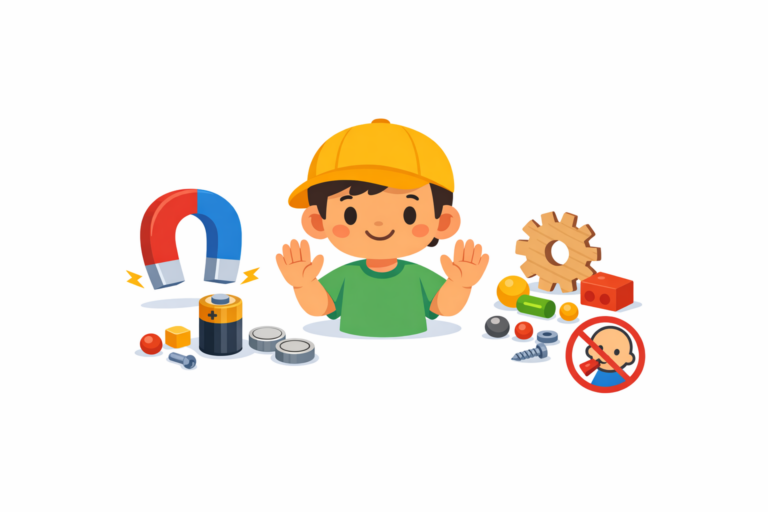
Scan for non-toxic labels, protective glasses when chemistry appears, and magnets that are secured. Think about your space. If cleanup needs a sink or outdoors, plan for that. Sturdy trays, zip bags, or a well-designed box mean the kit will live to see next weekend.
Match time to attention span
Note the shortest and longest build in the set. Aim for at least one quick win, one medium session, and one stretch project. If every build is a 2-hour marathon, it will gather dust.
Plan for your constraints
- Screen-free home. Choose tile coding, mechanical logic, or hands-on physics.
- Sensory needs. Skip loud motors or sticky slimes. Favor smooth parts and quiet builds.
- Mixed ages. Look for kits that scale, like gear builds with starter and advanced models.
- Tools and power. Check if it needs batteries, a tablet, or a soldering iron before gifting.
With a clear sense of curiosity, challenge, and constraints, the right kit jumps into focus. Keep your sticky note nearby. In the next sections, our quick decision tree and age-based guides will point you straight to strong options for ages 2 to 14.
FAQ
Buying decisions
Q: How do we pick a kit for a mixed-age household?
- Choose open-ended builds with large pieces if anyone is under 3.
- Look for sets with leveled challenges so older kids can go deeper.
- Make two bins: a shared bin and a small-parts bin for older kids only.
- Aim for 20 to 45 minute projects you can pause and resume.
Q: What if we do not know their interests yet?
- Start with quick-win samplers or building plus light-and-motion kits.
- Use our decision tree and age guides to narrow choices.
- Favor kits that teach transferable skills like measurement and sequencing.
- Pick reusable kits with low consumables so exploration can grow.
Setup and safety
Q: How much adult help will they need?
- Ages 2-4: full co-play and setup.
- Ages 5-7: you prep and read steps, they build with guidance.
- Ages 8-10: light supervision for safety and tricky steps.
- Ages 11-14: mostly independent, you check tool and chemical safety.
Troubleshooting
Q: The project is not working. What should we try first?
- Check power: fresh batteries, correct polarity, firm on-off.
- Reseat connections, clean contacts, match wire colors or ports.
- Recheck step order and part orientation, then recalibrate sensors if included.
- Test one module at a time to isolate the fault, then rebuild only that section.
If you remember one thing, make it this: start with their curiosity, then match the kit to your reality. The right pick aligns with what lights them up today and stretches them one small step further.
You now have three ways to move forward. Skim the quick picks if you need a gift today. Use the kit-matcher to narrow down by interest and learning goal. Or jump into the age guide that fits your kid and see our deeper advice, skills to expect, and setup tips.
No kit has to be perfect to spark a spark. Aim for a good fit, then build momentum with small wins and short sessions. That is how kids grow skills and confidence they will keep.
Choose with confidence: a quick recap and plan
What to pick when curiosity points in different directions
- Loves building and taking things apart: start with Building and Engineering. Add simple machines if they like cause and effect. Step into Robotics and Coding once they want things to move on their own.
- Drawn to blinking lights and buttons: begin with Electronics and Circuits. Snap systems feel magical for beginners. Move to breadboards when they crave control.
- Asks why things bubble, change color, or fly: try Chemistry and Lab Science or Physics and Energy. Keep sessions short. End with a show-and-tell.
- Obsessed with animals, plants, or the outdoors: Nature, Biology, and Eco kits make science feel alive. Add a low-stakes observation journal.
- Enjoys puzzles and patterns: Math and Logic kits deliver fast wins. They pair well with coding later.
- Dreams of stars and rockets: Space and Astronomy kits offer big wonder with simple tools. Build from sky maps to optics to model rockets.
- Artsy maker at heart: Maker and Art + Tech bridges creativity with circuits, LEDs, and wearables. Great for kids who say they are not into science.
A 5-step action plan you can do today
- Name one interest and one learning goal. Example: loves animals. Goal is careful observation.
- Pick a kit type that fits both. Shortlist two options in the age guide.
- Check time and supervision. Choose the option that you can actually support this week.
- Plan the first session. 20 to 30 minutes. One clear win. End while they still want more.
- Capture the spark. Take a photo, label the build, or record a one-line note. This makes the next session easier.
Edge cases and smart workarounds
- Mixed-age siblings: choose open-ended building or nature kits. Set simple roles. One builds, one tests, one documents.
- Advanced learner for their age: respect safety labels, but choose kits with modular challenges or add-on parts. Offer stretch goals, not harder tools.
- Sensory or mess sensitive: start with Math and Logic, Electronics snap kits, or screen-based coding. Keep a tidy tray and clear steps.
- Small space or travel: flat electronics, card-based logic puzzles, or compact robotics are easier to store and reset.
- Short attention span: pick kits with fast feedback. Lights, motion, or a single aha moment in under 10 minutes.
Keep the learning going after the first kit
Routines that build lasting skills
- Make a standing lab time. Same day, same short window. Consistency beats length.
- Use a simple notebook. Sketch, label, and note one finding each session.
- Rotate roles. Builder, tester, note-taker, presenter. It spreads confidence.
- End with a demo. Show a sibling or a friend. Teaching cements learning.
Easy ways to extend any kit
- Change one variable. Heavier load, different light source, new surface. Ask what changed and why.
- Set a mini mission. Build a bridge that holds three books. Code a robot to avoid a box. Grow two plants and compare.
- Mix categories. Add LEDs to a cardboard sculpture. Use math puzzles to plan a rocket angle. Graph chemistry results.
- Add constraints. Only five pieces. Only 15 minutes. Only two sensors. Creativity loves edges.
When and how to level up
- Signs they are ready: they predict outcomes, explain choices, and ask for more control.
- Engineering path: move from gears and beams to mechanisms with motion transfer. Then to projects that need planning and testing.
- Coding and robotics path: go from icon blocks to block-based logic, then to typed code. Add sensors and real-world inputs.
- Electronics path: start with snap circuits. Then to breadboards and basic components. Add safe soldering later with close supervision.
- Lab science path: grow from single-step reactions to multi-step procedures and data charts. Introduce safety habits early and repeat them often.
If you are still unsure, run the kit-matcher and open the age guide side by side. Pick the kit that you can set up fast, with one clear success on day one. That first win matters more than any spec sheet.

Leave a Comment