

If you live with a 5 to 7 year old, you know the questions never stop. Why does it float. How do wheels turn. Can we make one. That curiosity is gold. The right STEM toys turn it into hands-on practice with planning, testing, and talking through ideas.
We put this guide together as parents, coaches, and former classroom helpers who have sat on the floor and built the same model three times in a row. We watched what held attention, what broke, what actually taught a concept, and what got quietly shelved. Our short list favors toys that invite kids to build, tinker, and explain in their own words.
Here is how to use this guide. Skim the quick picks to match a toy style to your child’s interests and your setup. Then check our criteria so you know what to look for in the details. We also flag a few limits where a toy shines for some kids and falls flat for others.
Do this first. Ask your child one question: do you want to build something that moves or grow something and watch it change. That answer will narrow choices fast and make your first pick a win.
What matters most at this age. We look for open-ended builds with clear picture instructions, sturdy pieces that do not pop apart, a cleanup footprint that fits a shoebox or drawer, obvious next steps so kids can level up, and safe materials with no hidden magnets or brittle parts. We also tested for talk value. Good toys make kids explain what they tried, not just show a finished thing.
A few edge cases. If you have toddlers in the house, small parts are a hard no. If noise is an issue, skip motorized drills and choose quiet logic sets for after dinner. Some kits still need a grownup hand for the first setup. That is normal at this age, and we call it out when it matters.
Quick picks by interest and by your time or space
For builders who love vehicles and motion
Choose kits that let kids snap together wheels, axles, and simple gears. Look for picture-only steps and a few alternate models. These sets teach cause and effect without long read-alouds.
For tinkerers who like taking things apart
A take-apart animal or robot with a kid-safe screwdriver channels that urge to deconstruct. Aim for chunky screws, low torque, and a frame that can survive many rebuilds.
For quiet focus and travel days
Logic puzzles and pixel-style mosaics offer screen-free, low-mess challenges. They build spatial reasoning and patterning and fit in a small pouch for car rides or waiting rooms.
For kids who ask why plants grow or water moves
First science kits with seeds, root viewers, or simple water experiments give quick, visible results. Favor kits with reusable parts and clear adult tips for setup and cleanup.
For small spaces or shared classrooms
Open-ended blocks with 100 to 200 pieces balance creativity and storage. Stick to one connector style so kids spend time building, not hunting for special bits. Store in a shoebox or shallow bin.
How to choose the right STEM toy for 5 to 7
Match the challenge to fine motor and reading level
At five, large connectors and picture steps work best. By seven, many kids can handle smaller parts and multi-step builds. If your child struggles to press studs together, pick lighter clutch power and longer beams.
Check for true replay value
Scan the box or guide for alternate builds, open-ended prompts, or graduated challenges. Single-model sets look great once, then sit. Multi-model or free-build systems stretch across months.
Look for clear, visual instructions and fast first success
The first 10 minutes matter. Good kits start with a small win and then add complexity. If step one requires three hands, you will lose them. Favor big, numbered images and no text reliance.
Evaluate durability and cleanup footprint
Ask two questions. Will this survive a drop test on tile. Will it fit in the storage you have. If the toy sheds glitter, tiny caps, or 20 specialty pieces, expect friction at cleanup time.
Safety and supervision checkpoints
Avoid loose high-powered magnets and parts smaller than a bite-size snack if younger siblings are around. Choose non-toxic plastics or sealed components for science kits. Plan light supervision for tools with motion like kid drills.
Quick Comparison
| Product | Best for | Biggest strength | Biggest trade-off |
|---|---|---|---|
| Build-Your-Own Excavator STEM Kit for Ages 4–10 | Vehicle lovers who enjoy using tools. | Satisfying themed build with moving parts. | Limited to one main model. |
| STEM Building Set, 125 Pieces, Ages 3–8 | Open-ended building and teamwork. | 125 pieces offer lots of combos. | Cleanup and storage take time. |
| 10‑in‑1 STEM Building Kit for Kids – Build 10 Models | Kids who like step-by-step models. | Ten build options in one box. | Only one model can be built at a time. |
| Root Viewer Kit — Watch roots grow (ages 4–8) | Young gardeners and curious observers. | Makes root growth visible daily. | Results take patience over days or weeks. |
| 10-in-1 Electric STEM Construction Kit for Kids (Ages 5–10) | Budding engineers who want motion. | Electric parts add real movement. | More setup and supervision needed. |
| Doctor Jupiter My First Science Kit – 100+ Fun STEM Experiments for Kids | Families who want ready-to-go experiments. | 100+ activities keep variety high. | Adult help and cleanup are required. |
| NXONE 195-Piece STEM Blocks Kit with Storage Case (Ages 3–10) | Siblings or playdates who need lots to share. | 195 pieces and a storage case support big builds. | Sorting pieces can slow play. |
| Take-Apart T-Rex Dinosaur Toy with Electric Drill, STEM Building Fun for Kids 3–7 | Dino fans practicing fine motor skills. | Electric drill makes assembly exciting. | Small parts can get lost. |
| Laradola Take-Apart Dinosaur Building Kit with Electric Drill, STEM Toy for Ages 3–8 | Hands-on dino play and tool practice. | Electric drill builds confidence and dexterity. | Repetitive reassembly may limit long-term novelty. |
| 10-in-1 Electric STEM Building Kit for Kids 5–9+ | Powered builds with simple machines. | Combines construction with motion. | Complexity may frustrate younger kids. |
| Pink STEM Building Blocks Kit for Girls 4–10 | Builders drawn to a colorful, themed palette. | Encourages imaginative designs and storytelling. | Fewer advanced mechanisms than tech kits. |
| Kids Pixel Art STEM Kit (Medium) – Mosaic Craft Brain Teaser for Ages 5–12 | Quiet, screen-free focus time. | Builds patience and spatial reasoning. | Creations are static, not interactive. |
1. Build-Your-Own Excavator STEM Kit for Ages 4–10
Best structural starter set

Unlock your child’s creativity with our STEM building kit! Choose from 8 exciting models, boost science and engineering skills, and enjoy hands-on fun. Perfect for ages 5+!
$28.99
Price and availability are accurate as of 10/04/2026 04:27 am GMT and are subject to change.

This pick is for kids who light up at the sight of diggers, cranes, and big machines. If your 5 to 7 year old loves following steps to a clear finish, this kit hits that sweet spot of challenge and payoff. It also works well for grown-ups who want quick, satisfying build sessions that fit into after-school time.
We chose it because the 8 included models give real replay value. Kids practice following sequences, checking connections, and noticing how shape and structure affect stability. The construction theme pulls them in, and the multi-model approach nudges them to compare designs and talk through what works.
There are trade-offs. The first go can feel fiddly, and many kids benefit from a quick adult walkthrough before they take off on their own. If you want totally open-ended block play, the step-by-step focus here may feel a bit prescriptive. And of course, not every child is into vehicles.
A simple tip: lay out parts on a tray and start with one of the simpler builds before tackling the excavator. Invite your child to narrate each step as they go. When they finish a model, snap a photo and make a mini gallery so they feel proud and motivated to try the next one.
2. STEM Building Set, 125 Pieces, Ages 3–8
Best starter set

Spark your child’s creativity and build their STEM skills with these colorful, safe building blocks. Perfect for endless fun and learning together!
$30.99
Price and availability are accurate as of 10/03/2026 08:31 am GMT and are subject to change.
If your 5–7-year-old loves to tinker but you want something friendly and flexible, this 125-piece building set is a sweet spot. It is ideal for families with siblings or playdates, since the piece count lets two kids build at the same time without running out of blocks.
We picked it because open-ended blocks are the workhorse of early STEM play. Kids practice planning and testing while they try to make bridges that hold, towers that do not tip, and creatures that stand on their own. The colorful, safe pieces invite quick wins for new builders and still challenge older kids to design more detailed scenes.
The trade-off is guidance. There are no specific models, so kids who want a picture to copy might need a nudge to get started. It is also less advanced than specialized kits, which means you are trading complexity for sheer versatility.
A practical tip: set a 10-minute build prompt to kick things off. Try tallest tower, a home for a tiny toy, or a bridge between two books. Use a shallow baking tray or a foldable mat to keep pieces contained and make cleanup a one-minute job.
3. 10‑in‑1 STEM Building Kit for Kids – Build 10 Models
Best multi-model value

Transform 167 pieces into 10 exciting models! Perfect for sparking creativity, teamwork, and STEM skills. Discover endless fun and learning opportunities.
$26.99 Was $28.99 Save 7%
Price and availability are accurate as of 10/04/2026 01:38 am GMT and are subject to change.
If your kid loves building something new every week, this 10‑in‑1 kit hits the sweet spot. It is a great fit for ages 5 to 7 who want fresh challenges without getting overwhelmed. The 167 pieces invite solo focus or side‑by‑side teamwork, so siblings can share and trade turns.
We picked it because the ten model options stretch attention and creativity in short bursts. Kids get quick wins, then level up to more ambitious shapes. The piece count is substantial enough to feel like a real project, yet still friendly for small hands and early planners. It supports STEM habits we care about at this age: trying an idea, testing the fit, and talking through what to change.
There are trade‑offs. Small parts can vanish under the couch, and some children will want guidance on the first few builds. Confident builders may run through the ten ideas fast and ask for new prompts.
Tip: set up a simple sort station with two bowls or a muffin tin before building. Snap a photo of each finished model so kids can redesign it later without starting from scratch.
4. Root Viewer Kit — Watch roots grow (ages 4–8)
Best windowsill science

Explore the hidden world of plants with the Root Viewer! Perfect for kids to grow, track, and learn indoors. A fun, educational gift for young gardeners.
$16.99 Was $21.99 Save 23%
Price and availability are accurate as of 10/03/2026 06:51 am GMT and are subject to change.
If your kid lights up when a seed sprouts, this is their sweet spot. The Root Viewer is great for early elementary kids who like to check on projects daily. It lives happily on a windowsill, so it works in apartments, small homes, and classrooms that want a real, living science station.
We picked it because it turns a slow process into bite-size discovery. Kids can literally see roots and shoots change each day, which makes observation feel exciting instead of abstract. It invites simple math and science talk too. How long is the root today. What happens if we water less or move it to a sunnier spot.
The trade-offs are about time and care. Germination is not instant, and results vary with light and seed type. It needs routine watering, and some adult help at the start to set expectations and keep things tidy. After the first full grow cycle, interest may dip unless you try a fresh batch.
Tip: choose fast sprouters like beans or radishes for a quick win, and start two plantings a few days apart so there is always something happening. Have kids sketch what they see each day and measure root growth with a piece of string against a ruler.
5. 10-in-1 Electric STEM Construction Kit for Kids (Ages 5–10)
Best battery-powered builder

10-in-1 STEM kit builds cars, a robot, crane & more—sparks creativity and problem-solving. Easy instructions, storage bucket, and battery-powered fun. Pick a build and go!
$26.99
Price and availability are accurate as of 10/03/2026 08:18 am GMT and are subject to change.
If your 5 to 7 year old lights up when things move, this is a sweet spot pick. It builds cars, a robot, a crane, and more, so vehicle fans and little tinkerers both win. We like it for families who want quick starts, tidy storage, and satisfying action without a long setup.
We picked it because the ten model options keep kids building across many play sessions. The battery-powered element turns cause and effect into a big grin moment. Instructions are simple, the storage bucket keeps parts from wandering, and the builds are varied enough to grow confidence in following steps and then branching out.
Trade-offs are manageable. It needs batteries, and the first build usually benefits from a teammate. Some pieces are small, so plan a clear build space and a fast cleanup routine. The set leans on its model guides at first, so kids may need a nudge before they start inventing their own designs.
Our tip: start with a simple car to learn how parts connect, then issue a mini challenge like make it longer or make it carry a small load. Keep spare batteries and a tiny parts cup inside the bucket so you can grab and go next time.
6. Doctor Jupiter My First Science Kit – 100+ Fun STEM Experiments for Kids
Best experiment variety

Discover 100+ hands-on experiments that spark curiosity while making STEM learning a blast. Perfect for screen-free fun and budding scientists!
$29.99
Price and availability are accurate as of 10/04/2026 03:03 am GMT and are subject to change.
If your 5–7-year-old loves to mix, test, and ask what happens if, this is a welcoming first stop. It keeps little scientists busy with bite-size investigations that feel like play while building real curiosity.
We picked it because the 100+ experiment ideas mean you can pull out something fresh for rainy days, after-school slots, or weekend kitchen science. The guided activities help us focus on core habits like predicting, observing, and talking through results, without needing to design a lesson from scratch.
Trade-offs to expect: variety ranges from super simple to more involved, and some activities call for basic household supplies and a grown-up nearby. A few will be one-and-done, and there can be spills, so a washable surface is your friend.
Pro tip: make a small science station with a tray and a simple notebook. Let kids sketch a before and after for each experiment, then star the ones they want to repeat. That tiny ritual stretches the learning and keeps the kit in steady rotation.
7. NXONE 195-Piece STEM Blocks Kit with Storage Case (Ages 3–10)
Best drill building kit
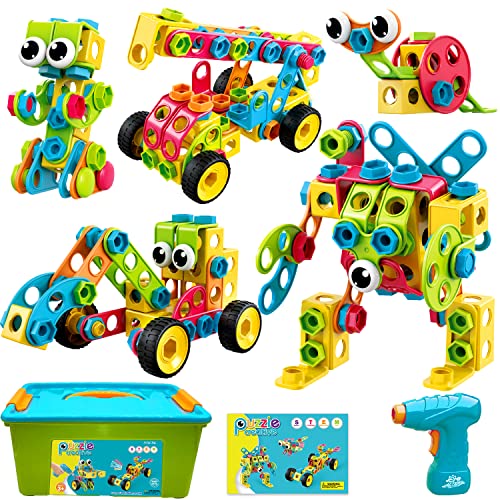
Discover endless fun with Nxone’s 195-piece STEM toy set! Comes with a safe electric drill and storage box. Boost creativity and teamwork. Perfect gift for kids!
$27.99
Price and availability are accurate as of 10/03/2026 07:28 am GMT and are subject to change.
If your 5 to 7 year old loves tools and big ideas, this set is a sweet spot. It invites builders who want to tinker, test, and work together. We like it for siblings or small groups where kids can trade roles and talk through their plans.
We picked it because 195 pieces give enough material to try a design, fix it, and try again. The safe electric drill changes the energy of the build session and turns fastening into a skill to practice. The included storage case keeps setup and cleanup simple, so the kit actually gets used.
There are trade-offs. A powered tool means clear rules and close eyes from an adult. Younger builders may need help starting connections and learning when to stop tightening. Loose parts can spread fast, so a build mat or tray helps.
Try setting a teamwork rhythm. One child handles parts and counts, one uses the drill, then swap every few minutes. Make a quick challenge like a bridge that holds a small book. End with a two-minute cleanup sprint back into the storage case by part type.
8. Take-Apart T-Rex Dinosaur Toy with Electric Drill, STEM Building Fun for Kids 3–7
Best for dino lovers

Build-and-play dinos with movable joints, kid-safe ABS, and a low-speed drill. Sparks STEM skills for ages 3+. Four colorful species—pick a fave and build!
$19.99
Price and availability are accurate as of 10/04/2026 05:23 am GMT and are subject to change.
If your kiddo roars through the house and loves tinkering, this take-apart T-Rex hits the sweet spot. Ages 5 to 7 get the thrill of using a tool like a grown-up, with a size and pace that fits small hands and short attention spans. It is hands-on, it is loud enough to feel real, and it ends with a dinosaur that moves and invites pretend play.
We picked it because it blends fine-motor practice with clear cause and effect. The low-speed drill teaches direction and control. The kid-safe ABS holds up to repeat builds. Movable joints keep the fun going after the build. And with four colorful species to choose from, kids can pick their favorite dino personality.
There are trade-offs. Screws can vanish if you build on the couch. The drill sound may bug noise-sensitive kids. Aligning parts the first time can take patience, so a quick adult check helps. Since it is one creature, rebuilds feel similar unless kids remix the order of steps or switch species.
Practical tip: set up a shallow tray and a small cup for screws. Teach righty-tighty, lefty-loosey with the drill before starting. After the build, challenge your child to make the T-Rex walk, chomp, and pose, or add blocks to create a simple dino habitat for bonus storytelling.
9. Laradola Take-Apart Dinosaur Building Kit with Electric Drill, STEM Toy for Ages 3–8
Best for tinkering hands
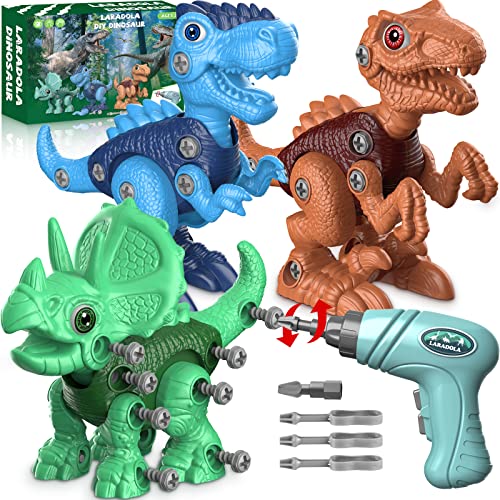
Perfect for little builders, this screen-free dino STEM kit teaches sequencing with color-coded builds, then lets them invent hybrids—kid-safe tools and tough ABS.
$19.98
Price and availability are accurate as of 10/04/2026 03:40 am GMT and are subject to change.
If your 5 to 7 year old loves dinosaurs and wants to use real tools, this take-apart kit hits the sweet spot. The color coding makes the build steps feel doable, so cautious kids can follow along and see progress fast. Confident tinkerers can jump to inventing wild hybrid dinosaurs once they understand the basics.
We picked it because it blends clear, learnable sequencing with open-ended creativity. The kid-safe electric drill turns building into play, not work, and the tough ABS parts can handle lots of assembly and take-apart cycles. It is a screen-free way to practice fine motor control, problem solving, and storytelling in one session.
There are trade-offs. Small parts mean you will want a defined workspace, and the first few builds may need a bit of coaching to align pieces and tighten gently. If a build takes a tumble, joints can loosen and need a quick retighten.
Pro tip: set out a muffin tin or sorting tray for the color-coded parts, then try a two-round challenge. Round one, build by the colors. Round two, swap a head or tail and name your new species. Store each dino in its own zip bag to keep cleanup simple.
10. 10-in-1 Electric STEM Building Kit for Kids 5–9+
Best electric intro kit

Build 10 cool models from one 109‑piece set—now with electric power! Boosts STEM skills with step‑by‑step guides and teamwork. Handy storage box included. Curious?
$29.99
Price and availability are accurate as of 10/03/2026 11:30 am GMT and are subject to change.
Best for kids who love movement and tinkering. If your 5 to 7-year-old is ready to go beyond plain blocks, this set gives them that exciting next step without being overwhelming. It also works well for siblings or small groups since the teamwork angle is built in.
We picked it because the 10-in-1 format stretches one box across many afternoons. The electric power turns simple assemblies into real experiments, so kids can test, observe, and tweak. Clear, step-by-step guides make early success likely, and the storage box means the set actually gets put away and pulled back out.
The trade-off is scale. With 109 pieces, the models stay modest. The electric component can invite frustration if parts are misaligned, so a calm adult nearby helps. Some kids may blast through the instructions and want more open-ended pieces afterward.
Tip: start with a quick, confidence-boosting build, then ask your child to predict what will happen when the powered part changes position. Give partners roles like builder, parts manager, and tester, then swap. That simple structure turns a build into a mini lab session.
11. Pink STEM Building Blocks Kit for Girls 4–10
Best collaborative build

Spark creativity with this versatile pink building set! 14 models for endless fun, boosts STEM skills, and perfect for teamwork. Great gift for girls 4-8.
$21.99
Price and availability are accurate as of 10/03/2026 07:32 am GMT and are subject to change.
If your 5–7-year-old lights up at a pink palette and loves to build with a buddy, this set fits right in. It has a broad age range on the box, but the sweet spot is early elementary, where kids can follow simple ideas and then riff on them.
We picked it because the 14 model ideas give structure without boxing kids in. That balance keeps them experimenting, talking through what to try next, and practicing basic design thinking. We’ve seen it turn into a teamwork magnet, with partners taking turns choosing the next model or adding on to a shared build.
Trade-offs are typical of building sets. The color theme may not call to every child, and like most kits, there are small pieces that need patience and a safe spot away from younger siblings. Expect to give a hand on the first build or two while kids learn how parts connect.
Tip: start with a quick co-build, then ask one prompt to extend play, like how can we make it stronger or what could we add to turn it into something new. Rotate through the model ideas over a few weeks to keep the set feeling fresh.
12. Kids Pixel Art STEM Kit (Medium) – Mosaic Craft Brain Teaser for Ages 5–12
Best quiet focus toy

Turn screen-free time into pixel-powered play: 50+ patterns, 4 STEM challenge types, 3 levels. Builds creativity, coding basics, and fine motor skills. Ages 5+. Learn more.
$14.99
Price and availability are accurate as of 10/03/2026 05:10 pm GMT and are subject to change.
If your kid loves art puzzles and calm concentration, this pixel kit hits the sweet spot. It is great for small spaces, quiet time, and screen-free breaks. We also like it for mixed ages, since the levels serve a 5-year-old and still challenge an older sibling.
We picked it because the 50+ patterns and 4 challenge types give real variety, and the 3 levels make it easy to scale up. The grid-based building sneaks in coding basics like coordinates, sequencing, and debugging. Add in the fine motor workout from placing tiny tiles, and you have a tidy STEM win that feels like art.
The trade-offs: it is static, not a motion or vehicle build, and tiny pieces require some setup and storage habits. Very young makers might need help choosing the right tile colors or following a pattern the first few times. Without prompts, kids may loop the same few designs.
Pro tip: pre-sort tiles by color in small cups or bags and set a 10-minute design challenge to keep momentum. Encourage kids to give “algorithm” instructions to a partner, step by step, then compare the result with the pattern. Leave a small display spot so finished mosaics get admired before the next build.
FAQ
Setup and storage
Q: How much space do we need for building kits?
A: A card table or a 3 by 3 foot floor square is enough for most 100 to 200 piece sets. Use a low tray or baking sheet to contain parts. Keep a shelf or corner free for in-progress builds.
Q: How do we keep pieces from disappearing?
A: Sort into three bins: common pieces, special parts, and tools. Use zip bags inside the bin. Add a photo of the model to the box for fast reassembly. End play with a two minute floor sweep.
Safety and supervision
Q: Are these toys safe for 5-year-olds who still mouth pieces?
A: Choose sets labeled for age 5 plus and check small parts warnings. Avoid loose high-strength magnets and marbles. Supervise any battery or tool use. Store button cells and spare bits out of reach, and replace cracked parts.
Buying decisions
Q: Should we choose an open-ended set or a themed kit first?
A: Open-ended sets give more replay and free building. Themed kits teach step-following and specific mechanics. If you want daily, flexible play, start open-ended. Add a themed kit later to stretch skills.
If we zoom out, the best STEM toys for ages 5 to 7 do two big jobs. They invite hands-on building and gentle frustration, and they spark talk about how things work. Open-ended blocks carry the daily load. Theme kits and take-apart sets add story and tools. Early science kits turn the kitchen into a safe lab. Quiet logic builds stamina for focused thinking.
A quick decision recap. Pick open-ended building if you want daily replay and siblings can join. Choose theme builds if your kid loves vehicles or dinosaurs and craves a clear finish. Grab a take-apart set for tool practice and fine motor work. Try first science kits for curious kids who ask why and like mess-with-a-purpose. Reach for quiet logic and pixel builds for calm times or travel.
If you are shopping up a level, see our best STEM toys for ages 8–10.
Your next steps can be simple:
- Observe for one week. Note what your child plays with longest and what they talk about.
- Choose one primary category and one contrast. For example, blocks plus a small science set.
- Set up a ready-to-play tray with only what is needed and a photo of a few starter builds.
- Co-play for 10 minutes. Model thinking out loud. Then step back.
- Add one challenge card each weekend. Change the constraint, not the whole toy.
- Rotate every 2 to 3 weeks. Box up half the pieces to keep novelty fresh.
- Capture wins. Take a photo, print it, and let your child title it.
Two edge notes. If your child is sensitive to sound, skip motorized toy drills and choose hand tools or snap-together builds. If small parts are a concern or your child still mouths pieces, stick with larger blocks and supervised experiment tools only.
Simple prompts that turn play into learning
Build with a rule
- Try a constraint that nudges creativity without locking things down.
- Ideas: Only 20 pieces. Must be taller than your water bottle. Use at least one triangle. No wheels allowed.
- What to say: How do we make it stable with fewer pieces. Which shape makes the best base.
Test like a scientist
- Give a clear variable to change and a way to compare.
- Ideas: Which ramp angle makes the car go farthest. Which bridge holds more coins. Which paper makes the best spinner.
- What to say: What will we change. What will we keep the same. How will we measure.
Talk like an engineer
- Encourage plan-build-iterate language.
- Ideas: Draw a before sketch. Build. Circle what changed after testing.
- What to say: What was the problem. What was your first idea. What would you try next time.
Link to real life
- Connect the build to places and jobs kids see.
- Ideas: Compare your tower to a water tower. Watch a short clip of an excavator, then copy one part. Look at a bike chain, then build a simple chain path with blocks.
- What to say: Where have we seen this in town. Who uses a tool like this.
Add math without worksheets
- Slip in counting, measuring, and simple data.
- Ideas: Tally crashes before the car stays on the track. Measure bridge span with string. Sort pieces by shape and graph with sticky notes.
- What to say: How many tries did it take. What changed on try number three.
Tell the story
- Bring literacy into the build without dropping the play.
- Ideas: Name the robot and write a one-sentence job. Record a 20-second video tour of the build. Make a museum label card.
- What to say: What is this machine for. Who would use it. What is a good title.
FAQs for STEM play at ages 5 to 7
How much help should we give
Be the guide at the start, then fade. In the first 5 to 10 minutes, set up the space, model safe tool use, and ask one good question. After that, let them struggle a little. Step back unless they are stuck for more than a minute or safety is an issue. Offer a nudge, not the answer. Try a choice between two next steps.
What if my child loses interest quickly
Short bursts are normal at this age. Aim for 10 to 20 minute sessions. Reduce piece count, add one clear goal, and end with a win. Rotate kits so they feel fresh. Snap a photo of the build and post it on the fridge. Seeing progress invites a round two tomorrow.
How do we handle small parts and safety
Match piece size to your child. If anyone in the home still mouths objects, choose larger blocks and simple tools only. Keep batteries and magnets out of reach unless sealed within parts meant for that age. Use a mat to catch rolling screws. Safety glasses make everything feel official and protect curious eyes.
Is screen-based coding a good idea at this age
It can be, but it is not required. Many kids benefit from off-screen sequencing first. Try unplugged coding games with arrows, story maps, or simple robots with big buttons. If you add screens, keep sessions short and tie them to a physical outcome like moving a bot or lighting an LED.
How do we store and rotate without chaos
Use clear bins with one kit per bin. Include a photo of three example builds and a short list of challenges. Keep one bin out, one on deck, and the rest tucked away. At cleanup time, sort by shape or color to sneak in math practice and keep sets complete.
What if my child has fine motor or sensory challenges
Choose larger connectors, softer textures, and fewer steps per build. Hand tools with big grips beat slippery mini pieces. Quiet sets help kids who dislike motor noise. Break tasks into micro-goals like attach two pieces, then take a movement break. Success beats speed every time.
How do we make siblings of different ages play well together
Give the older child a leadership job like tester, measurer, or parts manager. Offer parallel challenges at different levels using the same set. For example, the younger builds a garage while the older designs a ramp with a target distance. Share the finish line, not the exact same task.
If you pick one category that fits your child today, set up a simple play tray, and use a single prompt to stretch the build, you will see curiosity grow. STEM at this age is not about mastering a topic. It is about building the habit of asking what if, trying it, and talking about what happened. That habit sticks.
For a related deep dive, see child today, set up a simple play.