
We have all watched a shiny STEM kit light up the first weekend, then drift to the back of a closet. The problem is rarely the idea. It is usually fit, durability, or the kind of challenge the toy invites over time.
Our goal with this guide is simple. Get more learning out of every build session. That means picking kits that meet kids where they are, then keep stretching them without turning play into homework.
Do this first: write down two skills you want to see grow this season and one topic your kid is obsessed with right now. Circuits and measurement. Dinosaurs and counting. Coding and music. That small note will anchor every decision you make in this guide.
We will look at bundles, refurbished sets, and subscriptions, but we will not chase hype. We will weigh replay value, part quality, safety, storage, and support. We will also call out where value breaks down. For example, a low-cost refurb that ships without a calibration tool can stall a whole project. A subscription that jumps skill levels too fast can turn curiosity into frustration.
Here is how we think about real value. We look for open-ended builds, strong materials, clear instructions that teach concepts not just steps, sensible storage, replaceable parts, and a path to harder projects with the same pieces. When those line up, learning sticks.
How to choose the right STEM toy for real value
Match the skill on-ramp, not just the age number
Age ranges are blunt. Look for:
- Clear first build in under 20 minutes so confidence lands early.
- Scaffolded difficulty across at least three projects.
- A visible concept payoff. For example, seeing voltage change on a meter, or code altering a sound.
Edge case: kits labeled for broad ages can still start too hard if fine motor demands are high. If your builder struggles with tiny fasteners, choose snap-fit systems first.
Replay potential and expandability
Real value grows with reuse. Check for:
- Open-ended challenges beyond the manual. Can you remix builds without special parts.
- Ecosystem compatibility. Do pieces connect with sets you already own.
- Content that adds layers. For example, optional sensors, new block libraries, or real-world data tie-ins.
Micro-step: list the kits you have. Note any shared connectors or coding platforms. Aim to link new purchases to that ecosystem.
Build quality and service policies that back you up
Durability and support turn a good idea into a long-term tool.
- Materials: ABS or beech wood parts that resist cracking. Stainless fasteners. Strong, shielded cables.
- Safety: magnet strength that meets toy standards and enclosed magnets where possible. Heat management on motors and lights.
- Support: clear spare-part ordering, missing-piece replacements, and accessible manuals.
Limitation to watch: some refurbs and older kits lose access to software updates. If the app is required to run projects, confirm current compatibility first.
Great-value scenarios at a glance
Bundles that unlock cross-play
Bundles help when they reduce friction, not when they pad parts.
- Look for themed bundles that join sensors, motors, and frames that actually interconnect.
- Favor bundles that include storage trays or labels. Organization preserves sets and shortens setup time.
- Skip bundles that duplicate the same basic bricks you already have.
Refurbished and open-box kits that still shine
A good refurb can be a smart entry point.
- Best candidates: hard-part kits with durable shells and simple electronics like lights, switches, or passive sensors.
- Inspect for completeness checklists, cleaned parts, and verified firmware where relevant.
- Red flag: missing alignment tools, dead rechargeable batteries, or proprietary cables you cannot readily replace.
Subscription boxes that earn their spot
Subscriptions can teach sequencing and momentum if pacing feels right.
- Choose themes that map to your two skills note. Ask if levels adjust by builder feedback.
- Check that projects are self-contained and do not depend on past boxes you may have missed.
- Pause policies matter. You want the option to skip topics that do not fit your learner this month.
Potential downside: backlog creep. If kits stack up unopened, cancel or pause. Use the backlog as a mini-curriculum week before buying again.
Quick Comparison
| Product | Best for | Biggest strength | Biggest trade-off |
|---|---|---|---|
| Build-Your-Own RC F1 Car STEM Kit for Kids (Ages 8–14) | Tweens who want to build and then drive a working RC car. | Combines engineering build with hands-on driving for strong engagement. | More complex build and needs batteries and space to run. |
| 186-Piece STEM Building Blocks Kit for Kids Ages 4–8 | Early builders practicing basic shapes and tools. | Good starter piece count for guided builds and creativity. | Pieces may be small for younger hands without help. |
| 600-Piece Straw Builder STEM Kit for Kids 3–8 | Big, lightweight structures and open-ended play. | Very high piece count encourages large builds. | Can sprawl across rooms and bend if stored poorly. |
| Fivoro STEM Gears Building Set for Kids 3+ with Electric & Manual Modes (13 Pieces) | Introducing gears and motion to preschoolers. | Electric and manual options show cause and effect. | Very low piece count limits build variety. |
| Learning Resources STEM Explorers Machine Makers 60-Piece Set — Build Simple Machines (Ages 5+) | Early lessons on levers, pulleys, and simple machines. | Clear focus on mechanical concepts over freeform. | Smaller set size means fewer simultaneous builds. |
| Juboury 1054-Piece STEM Building Kit for Hands-On Learning | Kids who want long sessions and advanced challenges. | Huge part count supports many complex creations. | Sorting and cleanup take time and sturdy storage. |
| KAKATIMES STEM Building Blocks — Creative Construction Set for Kids 3–8 | Open-ended building with easy wins for younger kids. | Simple connections keep frustration low. | Older kids may outgrow the challenges quickly. |
| Caferria 110-Piece STEM Building Set for Kids Ages 3–10 | Mixed-age siblings sharing one beginner set. | Manageable size with a range of build options. | Limited pieces cap the size of projects. |
| NXONE 195-Piece STEM Blocks Kit with Storage Case (Ages 3–10) | Families who need grab-and-go builds and cleanup. | Included case makes storage and transport easy. | Mid-size piece count may not satisfy power builders. |
| Learning Resources STEM Explorers Domino Action – 59-Piece Chain-Reaction Set for Ages 5+ | Kids exploring chain reactions and sequencing. | Fast setup for satisfying cause-and-effect runs. | Single play pattern can feel repetitive over time. |
| FUBAODA 600-Piece STEM Building Blocks for Creative Play | Large group builds and freeform creativity. | High piece count supports many kids at once. | Requires strong storage solutions to avoid mess. |
| MOONTOY 11‑in‑1 STEM Building Kit for Kids Ages 4–8 | Kids who like structured models with clear outcomes. | Multiple model options extend guided replay. | Model switching needs adult help and careful sorting. |
1. Build-Your-Own RC F1 Car STEM Kit for Kids (Ages 8–14)
Best Great first RC build
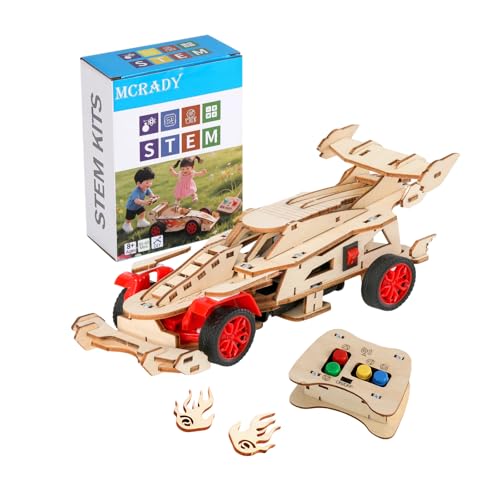
Build-and-drive STEM fun: kids 8–14 assemble a wooden F1 RC car, learn circuits and physics, then race it. Safe, customizable, tools included. Curious maker? Tap to see more.
$13.98
Price and availability are accurate as of 10/03/2026 05:21 am GMT and are subject to change.

If you have a curious maker in the 8–14 range who wants to build something real and then race it, this is a strong value pick. The kit blends a satisfying wooden build with RC play, so kids do not stop at the last step of the manual. They assemble, learn the basics of circuits and physics, and then head straight to the driveway. Tools are included, which keeps the total cost and setup time down. The wooden body is safe to handle and invites easy personalization.
From a value-first lens, it nails replay and learning. The build teaches practical concepts, and the drive phase keeps interest high after day one. Customizing the body adds another cycle of engagement. Safety checks are friendly here too. Wood is forgiving around hands and tables, and the final car is light enough for indoor practice on smooth floors if space allows.
Trade-offs are clear. It is not designed for rough terrain or hard crashes. The first wiring steps can be a stretch for brand-new builders, so a little adult guidance helps. If you want open-ended expansion or coding, look to a more modular robotics path. If you care most about hands-on building that leads to immediate, grin-worthy play, this kit hits the sweet spot.
2. 186-Piece STEM Building Blocks Kit for Kids Ages 4–8
Best Recommended Starter Pick

186-piece STEM kit with step-by-step builds (car, robot, dino). Boosts creativity and fine motor skills, with safe pieces and a handy storage box. Curious? Take a look.
$42.99
Price and availability are accurate as of 10/02/2026 07:09 pm GMT and are subject to change.
If you are shopping for a first STEM set for a 4 to 8 year old, this 186-piece kit hits that sweet spot between guided success and free building. The step-by-step car, robot, and dino projects give quick wins that build confidence. After that, the same pieces shift into open-ended mode for creative builds that stretch imagination and fine motor skills.
From a value-first lens, you get a wide piece selection, printed instructions for fast setup, and a storage box that keeps cleanup simple. That checks the boxes from our guide for replay value, ease of use, and lost-piece control. It is also an easy gift because kids recognize the themes and can start building right away.
The trade-off is depth. This is a hands-on building set, not a coding or electronics kit, so advanced challenges are limited. Older kids who have built a lot may outgrow the guide models and want something more complex.
If you care most about confidence-building play, start with the guided car, robot, and dino, then invite a remix: change the wheels, extend the arms, or swap colors. If you care most about long-term value, store parts in the included box after each session and set simple build prompts each week to keep ideas fresh.
3. 600-Piece Straw Builder STEM Kit for Kids 3–8
Best Great for group play

Unlock creativity and teamwork with 600 colorful straw connectors! Perfect for kids aged 3–8, these STEM blocks inspire endless imagination and fun. Discover more!
$25.99
Price and availability are accurate as of 10/03/2026 04:10 pm GMT and are subject to change.
If you want maximum build time per dollar and room for siblings or classmates to join in, this 600-piece straw connector kit is a smart pick. It hits that sweet spot for ages 3 to 8, where simple joins turn into big shapes, tunnels, and imaginative structures. We like it most for free play sessions, station work, and rainy-day challenges where kids set goals and revise their designs.
From a value-first lens, it checks many boxes. High piece count encourages collaboration and turn-taking, which boosts social skills along with STEM. Color variety supports sorting, counting, and patterning. The open-ended format means it grows with your child’s skill level and keeps delivering fresh challenges long after the first build.
Trade-offs are real but manageable. Straw-style builds are not as rigid as solid blocks, so finished structures may need gentle handling. With 600 pieces, cleanup can drag unless you plan for quick sorting. Younger builders might need a nudge to start larger designs or to troubleshoot wobbly sections.
If you care most about collaboration, scale, and creativity, go for it. If you want display-ready models or step-by-step builds, consider a smaller, guided kit instead. To keep it fun, set up a few shallow bins for fast color sorting and start with simple shapes before going big.
4. Fivoro STEM Gears Building Set for Kids 3+ with Electric & Manual Modes (13 Pieces)
Best Great beginner gears kit

Kids build dino or space scenes with interlocking gears that spin by hand or battery – sparking STEM skills. Safe, durable pieces for ages 3+. Learn more.
Price and availability are accurate as of 10/03/2026 06:26 am GMT and are subject to change.
If we want a first STEM gears kit for ages 3 and up, this is an easy win. The 13 piece size feels friendly for small hands and short attention spans, and it fits families who want quick setup and fast cleanup. The dino and space themes make it giftable and help hesitant builders dive in.
From a value lens, it nails the early learning sweet spot. Interlocking gears that spin by hand or with a battery let kids test cause and effect, then compare the feel of manual versus powered motion. The safe, durable parts also check our durability and safety boxes. Fewer pieces mean fewer lost parts, which keeps long term cost of ownership low.
The trade off is depth. With only 13 pieces, you will not get big, intricate gear trains or long build sessions. The powered mode also means we need to manage batteries. If we care most about open ended complexity, we should consider a larger gear set later. If we care most about a sturdy starter that teaches core concepts and keeps cleanup painless, this set delivers.
Tip: To stretch replay value, alternate manual and electric sessions and ask simple challenges like make every gear turn or change the direction of the spin. Small goals keep kids engaged without needing more pieces.
5. Learning Resources STEM Explorers Machine Makers 60-Piece Set — Build Simple Machines (Ages 5+)
Best Great First Machines Kit

Turn playtime into problem-solving: kids 5+ build real-world machines, tackle 9 STEM challenges, and learn physics and engineering while they tinker. Curious? Explore more.
$16.99 Was $25.99 Save 35%
Price and availability are accurate as of 10/02/2026 06:14 pm GMT and are subject to change.
This is a smart first step into building and tinkering for kids around 5 to 7. The guided format helps new makers feel capable fast, and the 9 STEM challenges keep sessions short and satisfying. It fits families who want real learning without long setup, and it works in small groups where turn-taking matters.
From a value standpoint, it nails the basics. Clear goals reduce frustration. Open-ended building still invites free play after the challenges are done. The 60-piece scope keeps storage simple and makes cleanup realistic for young helpers.
The trade-off is depth. With fewer pieces, complex machines are not the point, and older kids may move on quickly. If you care most about long-term build variety, look for a bigger set next. If you care most about early wins and physics talk at the table, this is right on target. A simple tip to stretch it: replay the same challenge with a new rule, like using fewer pieces or changing one part at a time to see cause and effect.
6. Juboury 1054-Piece STEM Building Kit for Hands-On Learning
Best Classroom Set

Discover endless fun with 1054 vibrant, safe pieces that spark creativity and learning. Build, imagine, and explore – check it out!
$20.99 Was $21.98 Save 5%
Price and availability are accurate as of 10/02/2026 09:49 pm GMT and are subject to change.
If you are outfitting a classroom, after-school club, or a busy playroom, this large building set hits the sweet spot. With 1054 vibrant, safe pieces, it supports parallel play and team challenges, and it grows with learners from simple shapes to ambitious structures. Families with multiple kids get a lot of shared build time from one buy.
From a value-first lens, the high piece count translates into long replay value and easy differentiation. We can spin up fast challenges, center-based activities, or open build sessions without running out of parts. The bright colors help with sorting and pattern tasks, while the open-ended format encourages creative problem solving and iteration.
The trade-off is management. A kit this size needs a storage plan and clear cleanup routines. Because it is open-ended, younger builders may need prompts or challenge cards to connect play to STEM concepts. If you care most about guided outcomes, start each session with a simple goal and a small selection of pieces, then expand as confidence grows.
If your priority is classroom throughput and group flexibility, this set delivers strong hands-on minutes per dollar. If your priority is low mess, rotate pieces in small batches and assign color or shape zones to streamline cleanup.
7. KAKATIMES STEM Building Blocks — Creative Construction Set for Kids 3–8
Best Recommended Starter Pick
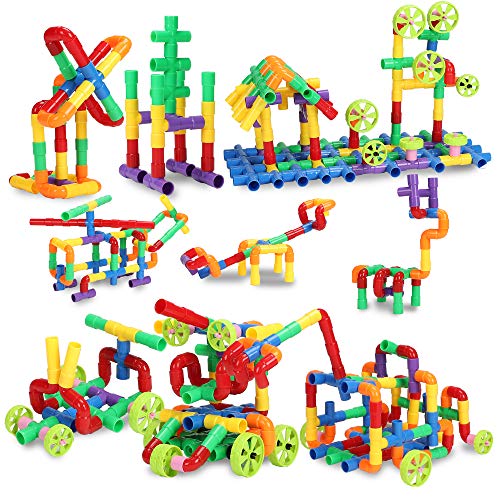
88-piece STEM blocks that click in countless ways for creativity, fine motor skills, and logic. Sturdy, easy to grip—build towers, windmills, animals. Curious? See more.
$20.99
Price and availability are accurate as of 10/03/2026 04:07 pm GMT and are subject to change.
If we want a first building set that grows with our learner, this checks the right boxes. The pieces are sturdy and easy to grip, so preschoolers can actually build without frustration. The 88-piece count supports sibling play or small groups, and the click-fit invites quick towers, windmills, and animal shapes. It is ideal for playrooms and classroom centers where open-ended time is part of the plan.
From a value lens, it nails durability, fast setup, and long replay. The click feel helps fine motor practice, while open play nudges early logic and spatial thinking. We get more sessions out of a set like this because kids keep revisiting it to invent new builds, not just follow one plan.
Trade-offs are clear. There are no guided challenges or advanced mechanisms. If we want step-by-step projects or deeper engineering themes, we should look to a kit with structured builds. If we care most about creative freedom and easy wins for ages 3 to 8, this is the safer bet. Tip: print or sketch simple build prompts like tallest tower, a creature with 6 legs, or a spinning shape to add gentle goals without extra cost.
8. Caferria 110-Piece STEM Building Set for Kids Ages 3–10
Best Open-Ended Creativity

Looking for a fun way to boost creativity? These 110-piece STEM blocks are safe, colorful, and perfect for kids aged 3–10. Great for hours of imaginative play!
$22.99 Was $25.99 Save 12%
Price and availability are accurate as of 10/03/2026 02:15 pm GMT and are subject to change.
This set fits families who want a simple, inviting way to spark building habits for kids from preschool through early elementary. The 110-piece count gives enough room for siblings to build side by side, and the colorful, safe pieces invite lots of free play without setup time. If you want a gift that is easy to pull out and always gets used, this checks that box.
From a value-first lens, it nails three things. Wide age coverage, strong replay potential, and flexible use in short or long play sessions. It is ideal for open-ended creativity and imaginative builds that change every time. That matters if you are trying to stretch learning across months, not weekends.
The trade-offs are about complexity. There are no advanced components or intricate builds here. Older kids who crave engineering challenges may want projects with more structure. You might also find fewer formal build guides than in some specialty kits, so plan to offer your own prompts.
If you care most about creativity, let kids free-build and rotate simple challenges like tallest tower or color patterns. If you prefer structure, pair it with printable build cards or timed challenges. And if cleanup is your pain point, add a small labeled bin so the 110 pieces stay ready for the next session.
9. NXONE 195-Piece STEM Blocks Kit with Storage Case (Ages 3–10)
Best Great starter toolkit
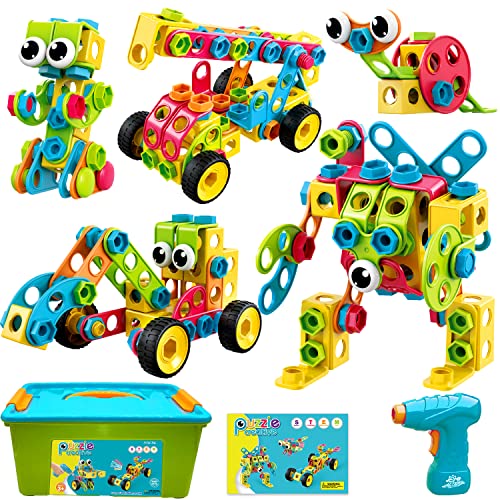
Discover endless fun with Nxone’s 195-piece STEM toy set! Comes with a safe electric drill and storage box. Boost creativity and teamwork. Perfect gift for kids!
$27.99
Price and availability are accurate as of 10/03/2026 07:28 am GMT and are subject to change.
If we want a flexible first builder set that grabs attention fast, this 195-piece kit fits well. The safe electric drill adds a hands-on twist that younger makers love, and the wide 3 to 10 age range means siblings can share without outgrowing it in a season. The storage case makes cleanup simple and turns it into an easy gift pick.
From a value-first angle, it nails replay time and group play. There are enough pieces for open-ended designs, plus the drill encourages teamwork as one kid holds parts while another fastens. It also checks practical boxes from our guide: storage, quick setup, and low-friction cleanup. We like it for 10-minute challenges or deeper weekend builds.
Trade-offs are real. This is about building basics, not coding or electronics. Younger kids need supervision with the drill, and ambitious designs may need more pieces or patience. If you care most about structured lessons, choose a kit with guided activities. If you want quiet, tool-free sessions, skip the drill on some builds and focus on hand assembly. For stretching value, pre-sort pieces into small bags, set timed build prompts, and use the case as a build tray to curb lost parts.
10. Learning Resources STEM Explorers Domino Action – 59-Piece Chain-Reaction Set for Ages 5+
Best Cause-and-effect starter

Domino runs meet STEM: kids explore cause-and-effect, kinetic motion, and skill-building challenges that grow with them. Great for ages 5+.”””
$17.59
Price and availability are accurate as of 10/03/2026 02:17 am GMT and are subject to change.
If we want a first chain-reaction set that teaches cause-and-effect without overwhelming a new builder, this is a strong fit. Ages 5+ can start small, watch motion travel, and learn to plan the next trigger. It suits family game night, after-school wind-down, or a classroom center where quick builds and resets keep everyone engaged.
From a value-first lens, it nails the core we care about: repeatable experiments, fast feedback, and skill steps that grow with the child. We get real learning per minute spent. Kids practice sequencing, spacing, and gentle hand control. The compact footprint means it works in small play areas, which helps it come out often.
Trade-offs are simple. With 59 pieces, the runs are satisfying but not massive. It prefers a level surface, and the nature of domino play means stray elbows can undo careful layouts. That is also part of the lesson: test, adjust, and try again.
If you care most about reliable success for young builders, start with short, straight lines and a single turn. If you want more spectacle, combine simple patterns or add safe household items as bridges and backstops. For multi-kid play, assign roles like placer, spacer, and tester so everyone gets a turn without crowding the setup.
11. FUBAODA 600-Piece STEM Building Blocks for Creative Play
Best Big piece-count value

Spark creativity with 600 vibrant blocks! Boost STEM skills and hand-eye coordination while enjoying fun, imaginative building adventures.
$19.99
Price and availability are accurate as of 10/03/2026 08:50 am GMT and are subject to change.
If we want maximum creative mileage per dollar, this 600-piece set is a smart pick. It shines for families with multiple kids, makers who like to free build, and classrooms that need lots of parts in circulation. The big piece count invites long sessions and collaborative builds without anyone running out of options.
From a value-first lens, it nails high replay, group flexibility, and piece-density. Open-ended blocks stretch from early stacking to more advanced structures, so we see steady skill growth without aging out fast. It also fits our deal-finding rule of thumb that larger, no-frills building sets usually deliver strong per-piece value, especially during sales cycles.
The trade-off is focus. This is about imagination, not motors or coding. Builders who want step-by-step models may ask for prompts, and the sheer number of pieces means we should plan storage and a quick cleanup routine.
If you care most about free-form creativity and shared play, choose this. If a child prefers guided challenges, print simple build prompts or weekly themes. If tidy time matters, add labeled bins or a play mat that cinches so those 600 pieces do not wander.12. MOONTOY 11‑in‑1 STEM Building Kit for Kids Ages 4–8
Best Starter-friendly build

175-piece STEM kit builds 11 models (one at a time)-tank to robot. Picture guides, safe washable parts, and a storage box. Great for teamwork and creativity. Ready to build?
$25.99
Price and availability are accurate as of 10/03/2026 02:51 am GMT and are subject to change.
If we want a true starter set for ages 4 to 8, this 175-piece kit hits the sweet spot. The picture guides keep frustration low for pre-readers, and the storage box makes it simple to set up and clean up. With 11 different models available one at a time, we get variety without overwhelming younger builders.
From a value angle, it nails the basics we care about: clear instructions, safe washable parts, and strong replay value through guided models plus free building. It also shines for sibling or parent-child teamwork, which stretches the learning time and keeps the set in rotation.
The trade-offs are modest. We can only display one model at a time, and some younger kids may need a little coaching on the first build. Kids at the top of the age range might crave a deeper engineering challenge down the line.
If we care most about easy wins and confidence building for new makers, pick this. If our priority is advanced complexity for older kids, we should look to a more challenging kit after this one builds their skills.
FAQ
Buying decisions
Q: Is a bundle always better value than single kits?
A: Not always. Check overlap between items, the number of distinct projects, and whether the bundle adds core pieces you will reuse. If half the parts duplicate what you own, a single advanced kit may stretch farther.
Q: How do I compare subscription boxes with one-time kits?
A: Look at cost per project and tool reuse. Boxes that build a tool library offer better long-term value. Check pause or cancel rules, age fit, and shipping. If you want depth on one topic, a one-time kit is often cheaper.
Setup and maintenance
Q: How do we store and track small parts so they do not get lost?
A: Use clear bins with labels and zip bags by project. Add a simple parts checklist in the lid. Color sort when possible. Take a quick photo of the completed build for reference. Make cleanup part of the last step.
Troubleshooting and safety
Q: What should we do if motors, batteries, or circuits do not work out of the box?
A: Use fresh batteries and confirm polarity. Reseat all connectors. Clean contacts with a dry cotton swab. Test one module at a time. Check for bent pins or loose wires. If still dead, stop and contact support with photos while within the return window.
If we had to boil this whole guide down, it would be this: real value is replay. Not the lowest sticker, but toys that keep teaching after the first build, survive drops, and grow with your kid. Deals help. But fit, durability, and expandability are what protect your dollars.
Next steps are simple. Match the kit to the child and the setting. Pick a type that can expand. Time your buy so you do not pay extra for hurry. And set up storage on day one so pieces do not vanish.
When in doubt, test early. Get to the first build fast, log a few sessions, and return or swap if it stalls. The best STEM kit should invite more questions after week one, not fewer.
Below is the short version of how we measure value and how you can keep up with good offers without turning deal-hunting into a job.
How we evaluate deal plus value
Learning per dollar, in practice
- Aim for at least 10 hours of engaged use in the first month. Thirty total hours across a season is a strong sign you picked well.
- Watch for skills that stack. Does the kit unlock new concepts after the first build, or is it one-and-done?
- Track quick wins. Keep a tiny log. Date, build or challenge, what was learned, and what to try next. Five lines max.
Durability and a path to fix
- Check for sturdy parts. Tight joints, solid gears, and screws you can re-seat. Thin clips that flex and go white under stress are a risk.
- Favor kits with spare-part options, standard fasteners, or community swap groups.
- Edge case: classrooms and toddler-adjacent homes need extra connectors and wheels. Plan a small spare bin from day one.
Replay and expandability
- Look for cross-compatibility with common bricks, sensors, or coding languages used in schools.
- Value goes up if you can add challenges without buying more. Printable mats, household obstacle courses, or DIY sensors make a big difference.
- A simple rule: if you can imagine five new builds without new parts, you likely have a winner.
Setup speed and storage
- Time-to-first-build under 20 minutes keeps momentum. Long firmware updates and app account gates kill interest.
- Pre-sort parts into zipper bags or small bins. Label motors, sensors, and specialty pieces.
- A laminated quick-start card by the kit beats a long manual every time.
Keep current without chasing every sale
A simple weekly scan
- Spend ten minutes once a week. Check your shortlist, set or review alerts, and peek at refurb or open-box filters.
- Skim one parent forum or educator group for user tips and fixes. Real-world feedback is faster than marketing copy.
- Archive what you pass on and why. It makes future choices simpler.
Seasonal timing that compounds
- Back-to-school and late winter often surface bundles and returns. Spring cleaning can bring open-box finds.
- Post-holiday and camp season are great for classroom packs and spare parts.
- For birthdays, shop four weeks early so you can test, replace, or swap without panic.
Refurb, open-box, and returns done right
- Read the grading policy and warranty length. Confirm the missing-piece policy before you open the box.
- Test every motor, sensor, and battery connection on day one. Film the unboxing for easy support.
- If a kit needs proprietary consumables, confirm you can buy them again at normal times of the year.
Know when to walk
- Skip kits that lock features behind paywalls or need odd batteries you cannot stock.
- Avoid fragile gearing for younger builders who push hard on levers.
- If adult assembly is heavy for a pre-reader kit, it will sit on a shelf. Pass.
Quick action plan
- Define the goal: build skills, code basics, or free-form engineering.
- Choose the kit type that matches attention span and age.
- Set a test window and a return-by date on your calendar.
- Prep storage before unboxing. Label and bag small parts.
- Plan three starter challenges that do not need add-ons.
- Log session one. If it flops twice, swap the kit.
Decision recap
- Builders who love open play: choose modular systems with cross-compatible parts.
- Coders and tinkerers: start with block coding that graduates to text. Check sensor support.
- Gift buyers: pick a themed bundle with clear first builds and its own storage.
- Classrooms or clubs: prioritize spare parts, bulk packs, and laminated task cards.
- Tight budget: prefer refurb or open-box with a solid return window over a cheaper, brittle kit.
Two caveats before we close
- Households with under-threes should watch for small parts and magnets. Gate the build area and use a parts mat.
- For sensory-sensitive kids, avoid loud gearboxes and flashing LEDs. Choose quieter builds, clear instructions, and predictable steps.
If you take nothing else, take this: buy for replay, set up for success, and let the challenges grow with your kid. That is how we turn a deal into real value.